Nabeel Al Nassir
July 16, 2026
4 Min read
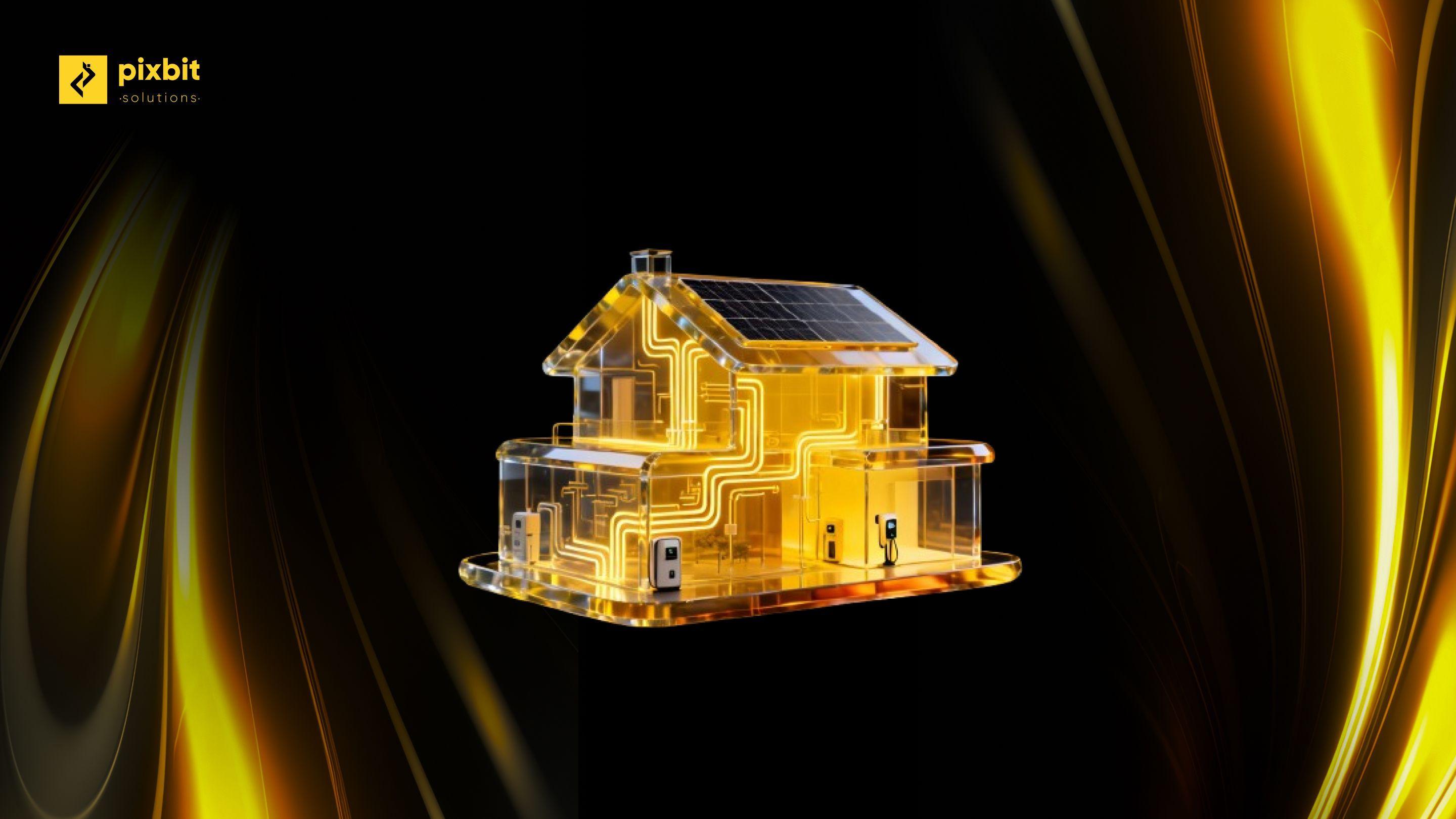
Dubai's smart city strategy has transformed utilities from standalone service providers into digital infrastructure. Through smart meters, advanced metering infrastructure (AMI), and continuous investment in smart grid technologies, DEWA is enabling buildings to consume, monitor, and manage electricity and water more intelligently. The challenge is that most property management platforms, facility management systems, and PropTech applications still treat DEWA as an external utility that requires manual bill downloads and offline reconciliation. Effective DEWA smart home integration allows software to connect utility information directly with property operations, giving landlords, facility managers, and tenants a unified digital experience.
Many developers begin a DEWA smart home integration project expecting a fully documented public API that exposes every utility function.
In practice, the ecosystem is considerably more nuanced.
DEWA has invested heavily in digital services through its customer portal, smart applications, digital account management, and smart metering infrastructure. Customers can access electricity and water consumption history, billing information, payment services, account management, notifications, and various smart services through DEWA's digital ecosystem.
From a software engineering perspective, however, not every capability is currently available as an open developer API suitable for third-party platforms.
Some workflows remain customer-driven through authenticated portals, while others are available only through approved enterprise integrations or partnerships.
This distinction is important because software architecture should never assume unrestricted API access simply because digital services exist.
Instead, developers should categorise utility information into three groups.
The first category contains information that can realistically be integrated through approved digital channels, enterprise partnerships, or authenticated account connections.
The second includes information that can be imported through structured exports or administrative workflows when direct APIs are unavailable.
The third consists of operational data that continues to require manual user interaction until broader digital integrations become available.
Designing around these categories prevents the platform from becoming dependent on assumptions about future API availability.
One of the most valuable datasets for modern property platforms is smart meter consumption history.
Rather than waiting until monthly invoices are generated, smart metering enables electricity and water usage to be measured continuously across connected properties.
For property owners, this creates opportunities to monitor building performance, identify abnormal consumption patterns, and improve operational efficiency.
For tenants, it provides greater transparency into utility usage over time.
Instead of treating utility bills as isolated financial documents, software can present historical consumption alongside lease information, maintenance records, occupancy data, and operational analytics.
This produces a far richer property management experience than simply storing PDF invoices.
Billing remains one of the most common touchpoints between property software and utility services.
Most landlords and facility managers still manage DEWA invoices separately from their property management platforms.
Finance teams often download invoices manually before reconciling them against tenancy records, lease agreements, or accounting software.
An integrated PropTech platform should eliminate much of this duplication.
Rather than maintaining separate operational systems for utilities and property management, billing information should become part of the property's financial timeline.
Administrators should be able to associate utility accounts with individual buildings, units, tenants, or owners while viewing historical invoices alongside rental payments and maintenance expenses.
This unified financial view significantly reduces administrative effort while improving visibility across the entire property portfolio.
A recurring challenge in utility integration is identity mapping.
Utility providers identify customers differently from property management platforms.
Property software typically organises information around:
Property.
Building.
Unit.
Tenant.
Owner.
Lease.
DEWA, meanwhile, manages customer relationships through utility accounts linked to service locations.
A successful integration therefore requires an intermediate mapping layer that associates utility accounts with the platform's own property hierarchy.
Rather than hardcoding account relationships directly into business logic, developers should create configurable account-linking services capable of handling ownership transfers, tenancy changes, vacant units, and account updates throughout the property's lifecycle.
This abstraction makes the platform considerably more resilient as occupancy changes over time.
Ultimately, the objective of DEWA smart home integration is not simply to display utility information inside another dashboard.
It is to make utility data behave like any other operational dataset inside the property platform, allowing consumption, billing, occupancy, maintenance, and financial information to work together through a single digital ecosystem.
The real value of DEWA smart home integration emerges when utility information becomes part of the property's operational workflow rather than remaining isolated inside finance or facility management systems.
Many property management platforms continue treating utilities as external services.
Tenant information is maintained in one application.
Lease agreements reside in another.
Maintenance records are stored elsewhere.
Utility bills are downloaded manually from the DEWA portal before being reconciled with accounting software.
This fragmented workflow increases administrative effort while making it difficult to understand the complete operational history of a property.
A modern property management platform should instead treat utility information as another operational data source alongside tenancy, maintenance, payments, inspections, and building assets.
One of the first architectural challenges involves mapping utility accounts to the property's data model.
A single residential tower may contain hundreds of apartments.
Each apartment may have multiple tenants throughout its lifetime.
DEWA accounts are created, transferred, and closed as occupants move in and out.
The software should therefore avoid permanently attaching a DEWA account to a property record.
Instead, utility accounts should be associated with active tenancy periods.
Whenever a tenant moves out, the relationship should end while preserving historical utility records.
When a new tenant occupies the same unit, the platform simply creates a new account association without affecting previous billing history.
This historical relationship model allows property managers to answer questions such as:
Which tenant occupied the property during a specific billing period?
Which utility account was active at that time?
Were outstanding bills settled before the tenancy ended?
Without maintaining separate spreadsheets or archived documents.
Property managers rarely want to switch between multiple applications simply to understand how a building is performing.
Instead of requiring administrators to log into utility portals separately, the property dashboard should consolidate operational information into a single interface.
Each property or unit should present:
Current occupancy.
Lease status.
Utility account status.
Historical electricity consumption.
Historical water consumption.
Outstanding utility charges.
Recent billing activity.
Payment history.
Maintenance requests.
Inspection records.
Displaying these datasets together provides considerably more operational context than viewing each system independently.
For example, unusually high electricity consumption may coincide with maintenance issues, vacant units, HVAC faults, or tenant complaints.
When all operational data exists within one platform, identifying these relationships becomes significantly easier.
Utility information also plays an important role in tenancy management.
Many landlords require tenants to maintain active utility services throughout the lease period.
Outstanding utility obligations often need to be resolved before tenancy termination, lease renewal, or security deposit settlement.
Rather than manually verifying utility status during every lease transition, the software should surface relevant account information directly inside the tenancy workflow.
When administrators review an active lease, they should immediately understand whether utility accounts are active, whether recent bills remain unpaid, and whether any outstanding issues require attention before processing lease changes.
This reduces administrative overhead while helping property managers maintain consistent operational procedures.
For organisations building property platforms in Dubai, Ejari API Integration for Dubai Property Management Software provides another important layer of automation. While Ejari manages tenancy registration and compliance, DEWA integration complements it by connecting utility operations to the same tenancy lifecycle, creating a far more complete digital property management experience.
The benefits of integration become even more apparent when managing large property portfolios.
Instead of analysing each property individually, administrators should be able to compare utility performance across multiple buildings.
A portfolio dashboard may reveal that one residential tower consistently consumes more electricity than similar buildings despite comparable occupancy levels.
Another property may show increasing water usage over several months despite stable tenant numbers.
These trends can highlight opportunities for maintenance investigations, energy optimisation initiatives, or operational improvements long before they become visible through monthly financial reports.
Rather than serving purely as billing information, utility data becomes another business intelligence source that supports more informed decision-making across the entire real estate portfolio.
This shift—from isolated utility records to integrated operational intelligence—is what ultimately makes DEWA smart home integration valuable for modern PropTech platforms.
Although DEWA smart home integration often begins with electricity and water consumption, modern smart buildings generate significantly more operational data than utility meters alone.
Commercial towers, residential communities, mixed-use developments, and large property portfolios increasingly rely on interconnected building systems that continuously exchange operational information.
These systems include HVAC controllers, lighting automation, occupancy sensors, Building Management Systems (BMS), access control platforms, environmental monitoring devices, lift management, water pumps, fire safety systems, and renewable energy installations.
Treating DEWA purely as a billing integration overlooks the much broader opportunity.
A well-designed PropTech platform should function as the central operational layer that brings utility information together with building automation data rather than operating as isolated software modules.
One of the most valuable use cases emerges when electricity consumption is viewed alongside other operational datasets.
For example, increasing energy consumption during periods of low occupancy may indicate HVAC scheduling issues rather than higher tenant demand.
Similarly, unusually high overnight electricity usage may point to equipment running outside configured operating hours.
When utility consumption is combined with occupancy information, maintenance history, environmental sensors, and asset management records, facility managers gain much deeper operational visibility.
Rather than simply displaying monthly consumption figures, the software begins identifying patterns that support better building management decisions.
This approach also creates opportunities for predictive maintenance.
Unexpected increases in electricity usage may reveal declining equipment efficiency before failures become visible through traditional maintenance schedules.
As Dubai continues encouraging distributed renewable energy generation through the Shams Dubai initiative, property software increasingly needs to account for buildings that both consume and generate electricity.
Although many organisations initially focus on monitoring electricity imported from the grid, buildings participating in rooftop solar programmes introduce an additional layer of operational complexity.
Instead of assuming electricity flows only in one direction, the platform should be capable of recording:
Grid electricity consumption.
Solar energy generation.
Net energy usage.
Historical production trends.
Building-level energy performance.
This information becomes particularly valuable for commercial buildings and residential communities seeking to improve sustainability reporting while reducing operational costs.
Rather than creating a separate solar management application, renewable energy metrics should become another component of the property's operational dashboard.
Residential electric vehicle charging is also becoming increasingly common across Dubai's apartment communities and mixed-use developments.
While enterprise charging networks require specialised Charge Point Management Systems, residential property platforms frequently need only limited visibility into charging infrastructure.
For example, property managers may wish to monitor charger availability, electricity consumption associated with common-area charging stations, or energy allocation between building facilities and EV charging infrastructure.
These requirements differ significantly from the enterprise charging networks discussed in our EV Charging Station Management Software India series.
Instead of implementing charging protocols directly inside the property platform, developers should expose integration interfaces capable of consuming charging data from dedicated charging management systems whenever required.
This separation keeps each platform focused on its primary operational responsibilities while allowing information to flow between them.
Although this article focuses on DEWA, enterprise property software should never assume that one utility provider will remain the only source of operational data.
Property developers often manage assets across multiple emirates.
Facility management companies may expand into neighbouring GCC markets.
Large organisations frequently integrate with several utility providers over the lifecycle of their software.
For this reason, developers should avoid embedding DEWA-specific business rules throughout the application.
Instead, utility information should enter the platform through a standardised ingestion layer capable of supporting multiple providers.
Consumption records, billing information, service notifications, and account relationships should follow a common internal data model regardless of their origin.
By abstracting utility providers behind a consistent integration interface, new providers can be introduced with minimal impact on the rest of the application.
This architecture not only simplifies future expansion but also ensures that the property platform remains adaptable as Dubai's smart infrastructure ecosystem continues to evolve.
Ultimately, the objective is not to build software exclusively around DEWA.
It is to build an intelligent property platform capable of incorporating utility data, IoT systems, renewable energy, and building automation into a single operational ecosystem that can grow alongside the city's broader smart building initiatives.
Building DEWA smart home integration is less about connecting to a single utility provider and more about designing a software architecture that can accommodate evolving digital services without creating long-term technical debt.
Many first-generation property platforms tightly couple utility integrations directly into tenancy management, billing, or facility management modules.
This approach may appear simpler during initial development, but it quickly becomes difficult to maintain as business requirements expand.
Instead, DEWA should be treated as one of several external operational data sources entering the platform through a dedicated integration layer.
Business modules should never depend directly on DEWA-specific APIs, authentication methods, or data structures.
Rather, they should consume standardised utility information regardless of where it originates.
This abstraction makes the platform considerably easier to extend as additional utility providers, smart building systems, or future government services become available.
A common mistake is allowing each application module to communicate independently with external utility services.
For example, the finance module may request billing information directly, while the property dashboard retrieves consumption data through another integration, and the maintenance module queries outage information separately.
Besides creating duplicated code, this architecture makes future changes expensive.
A better approach is introducing a dedicated utility integration service that acts as the single interface between external providers and the rest of the platform.
Every request for billing information, consumption history, account status, or service notifications should pass through this common layer.
Internally, the platform continues working with a consistent data model regardless of whether information originates from DEWA, another utility provider, or manually uploaded records.
This design dramatically reduces coupling while simplifying future maintenance.
Although Dubai continues expanding its digital infrastructure, software should never assume every operational workflow is fully automated.
Enterprise property management platforms frequently support organisations with varying levels of digital maturity.
Some buildings may have fully connected utility accounts.
Others may still rely on exported billing statements or administrative uploads.
Rather than forcing customers into a single workflow, the platform should support both automated and manual data ingestion.
If consumption information can be retrieved digitally, the system should synchronise it automatically.
If structured exports remain necessary, administrators should be able to upload validated files without disrupting the property's operational history.
Maintaining these fallback workflows ensures the software remains usable across diverse portfolios while avoiding unnecessary implementation delays.
Another misconception involves data freshness.
Many developers assume utility consumption behaves like IoT sensor data that updates every few seconds.
In reality, consumption information is often processed in intervals and should not be treated as a continuously streaming dataset.
Displaying every dashboard element as "live" may therefore create unrealistic user expectations.
Instead, the platform should clearly distinguish between operational status and historical consumption.
Recent meter readings can be synchronised according to the update frequency supported by the underlying data source, while historical reports remain available for trend analysis and financial reconciliation.
Separating these concerns improves both performance and user experience.
Since utility information changes far less frequently than operational building events, aggressive real-time synchronisation is rarely necessary.
Instead, developers should implement scheduled synchronisation jobs that retrieve updated consumption records at configurable intervals.
Recently synchronised information can then be cached within the platform, allowing dashboards to load quickly without repeatedly querying external services.
This architecture offers several advantages.
It reduces dependency on external system availability.
It minimises unnecessary network requests.
It improves application responsiveness for administrators managing large property portfolios.
Most importantly, it creates a resilient platform capable of continuing normal operations even if external utility services become temporarily unavailable.
Utility information should never overwrite previous records.
Consumption, invoices, account associations, and payment statuses represent historical business events that may later become relevant during financial audits, tenant disputes, or operational investigations.
Instead of updating existing records in place, the platform should preserve historical versions whenever significant changes occur.
This allows administrators to reconstruct what utility information looked like at any point during a property's lifecycle.
For example, if a tenant disputes an electricity charge six months after vacating a property, the platform should be capable of displaying the exact consumption records, billing information, and account associations that existed during that tenancy period.
Maintaining this historical integrity significantly improves trust in the platform while reducing operational ambiguity.
Ultimately, successful DEWA smart home integration depends less on individual APIs and more on thoughtful software architecture.
By treating utility providers as modular data sources, supporting manual fallback workflows, implementing intelligent synchronisation, and preserving historical records, developers can build property platforms that remain adaptable as Dubai's smart infrastructure ecosystem continues to evolve.
Many property technology projects fail to realise the full value of DEWA smart home integration not because of missing APIs, but because of architectural assumptions made during the early stages of development.
One of the most common mistakes is assuming that every DEWA workflow is available through a public, real-time API.
Developers often begin projects expecting direct programmatic access to billing information, consumption history, outage notifications, account management, and payment status across every use case.
In reality, the level of digital integration varies depending on the service, customer type, and implementation model.
Software should therefore be designed to support both automated and semi-digital workflows rather than depending entirely on live integrations.
Another frequent issue is ignoring manual fallback processes.
Many enterprise applications fail whenever an automated integration becomes temporarily unavailable because no alternative workflow exists.
Instead, administrators should always be able to validate, upload, reconcile, or update utility information through structured operational processes.
This ensures business continuity while reducing operational risk.
A third mistake is treating utility information as static data.
Electricity consumption, billing records, account ownership, and payment status all evolve over time.
If the platform simply overwrites previous values whenever new information arrives, historical context disappears.
This becomes particularly problematic during billing disputes, lease transitions, tenant move-outs, security deposit settlements, and financial audits.
A better approach is maintaining versioned historical records.
Every billing period, consumption snapshot, account relationship, and payment update should remain traceable so administrators can reconstruct the complete operational history of any property whenever required.
Finally, many systems tightly couple DEWA-specific logic throughout the application.
As organisations expand into Abu Dhabi, Sharjah, or other GCC markets, supporting additional utility providers often requires significant redevelopment because business modules depend directly on provider-specific integrations.
Abstracting utilities behind a common integration layer from the beginning avoids this problem while making future expansion considerably easier.
| Capability | What's Available Today | What the Software Should Do |
|---|---|---|
| Smart meter data | Historical consumption is available through DEWA's smart metering ecosystem, although integration models vary | Synchronise consumption history, associate it with properties and tenants, and preserve historical records |
| Digital billing and account linking | Digital billing, account management, and customer portals are well established, but enterprise integration approaches differ | Link utility accounts with units, leases, tenants, and financial records through configurable mapping services |
| Shams Dubai integration | Solar-enabled buildings continue to grow across Dubai | Support renewable energy generation alongside traditional utility consumption without creating separate operational systems |
| Outage and service status | Certain notifications and operational information are digitally available, while coverage varies by workflow | Display utility events within operational dashboards without assuming continuous real-time availability |
| Non-digital or semi-digital properties | Some operational processes still depend on manual administration or exported records | Provide structured import, reconciliation, validation, and fallback workflows that preserve operational continuity |
Modern DEWA smart home integration is not simply about displaying electricity bills inside another dashboard. It is about bringing utility consumption, tenancy management, maintenance operations, financial records, and smart building data together inside a unified PropTech platform that reflects how buildings actually operate.
For organisations already modernising their Dubai property platforms, our guide to Ejari API Integration for Dubai Property Management Software explains how tenancy registration and regulatory workflows complement utility integration throughout the property lifecycle. Together, these capabilities form the foundation of enterprise-grade real estate software built for Dubai's digital ecosystem.
Most DEWA-enabled property management platforms typically fall within the AED 180,000 to AED 700,000+ range depending on portfolio size, IoT integrations, and enterprise requirements. Pixbit scopes every implementation during a single discovery session before defining the final architecture and project roadmap.

Digital Marketer
Share on
Have an idea that needs to go mobile? Launch it with us!
Let's Talk
Explore insightful articles and tips from our experts on the latest trends in web development and marketing.
Tell us your business aspirations, and let's craft a custom solution that drives business growth, ensuring satisfaction and exceeding your goals with precision.
Let's Talk