Nabeel Al Nassir
October 26, 2026
7 Min read

Choosing a web development company in Dubai comes down to five checks: whether the team asks about your business goals before quoting, whether you can test live sites they built recently, who actually writes the code, how scope changes are priced, and what happens after launch. Design samples and the headline quote are easy to compare. These five checks are what predict whether the project lands on time and keeps working after handover.
A web development company plans, designs, builds, tests and launches websites and web applications, then supports them after go-live. In Dubai the brief usually goes further than a brochure site. Most business websites now need Arabic and English versions with proper right-to-left layouts, a content management system the marketing team can run, lead forms connected to a CRM, and often a payment gateway, booking engine or UAE PASS sign-in. A good partner treats the website as a business system that has to produce enquiries, not as a design file that happens to be online.
That scope matters when you shortlist. Some agencies are strongest at visual design and outsource development. Others are engineering teams that build portals and web apps but have little interest in brand or content. Neither is wrong, but you should know which one you are talking to before you compare quotes, because their proposals will describe very different projects under the same heading.
The first meeting tells you more than the portfolio. A team that starts with your sales process, how leads arrive today, which systems the site must talk to and who will update content is scoping a solution. A team that opens with a moodboard is scoping a look. Both conversations happen eventually, but the order shows what the company optimises for.
Pay attention to whether they push back. If you ask for twenty pages and they ask which five pages actually drive enquiries, that is a good sign. If every request is accepted without a question, expect the same lack of judgement when the build runs into trade-offs between budget, speed and quality.
Portfolio pages show cropped screenshots that can hide slow load times, broken mobile menus and Arabic pages that were never finished. Ask for three live URLs the company launched in the last year, ideally in a sector close to yours, and open them on your phone. Check how fast the first screen appears, whether the navigation works with one thumb, whether the Arabic version is complete and whether the contact form actually submits.
Then ask what the company changed after launch. Teams that can talk about conversion fixes, speed work or new features on a live client site are still involved in how that site performs. Pixbit points prospective clients to work such as the Range International property platform, built on Next.js and Payload CMS, because a live platform with real traffic is harder to fake than a slide.
Many Dubai agencies keep account management and design in-house and subcontract development to a separate team or a freelancer network. This is not automatically a problem, but it changes who is accountable when something breaks three months after launch, and it often explains why timelines slip when the subcontractor is busy with other clients.
Ask directly who the developers are, where they sit in the company and whether the same people will support the site after launch. Ask which stack they recommend and why. A clear answer about Laravel, Next.js, React or a headless CMS, tied to your requirements, shows the team has thought about your project. A vague answer suggests the stack is whatever the subcontractor happens to use.
Almost every web project changes along the way. A page gets added, an integration turns out to need more work, or the marketing team asks for a new landing page template halfway through. The question is not whether this will happen but whether the company has a written process for pricing and scheduling changes before you sign.
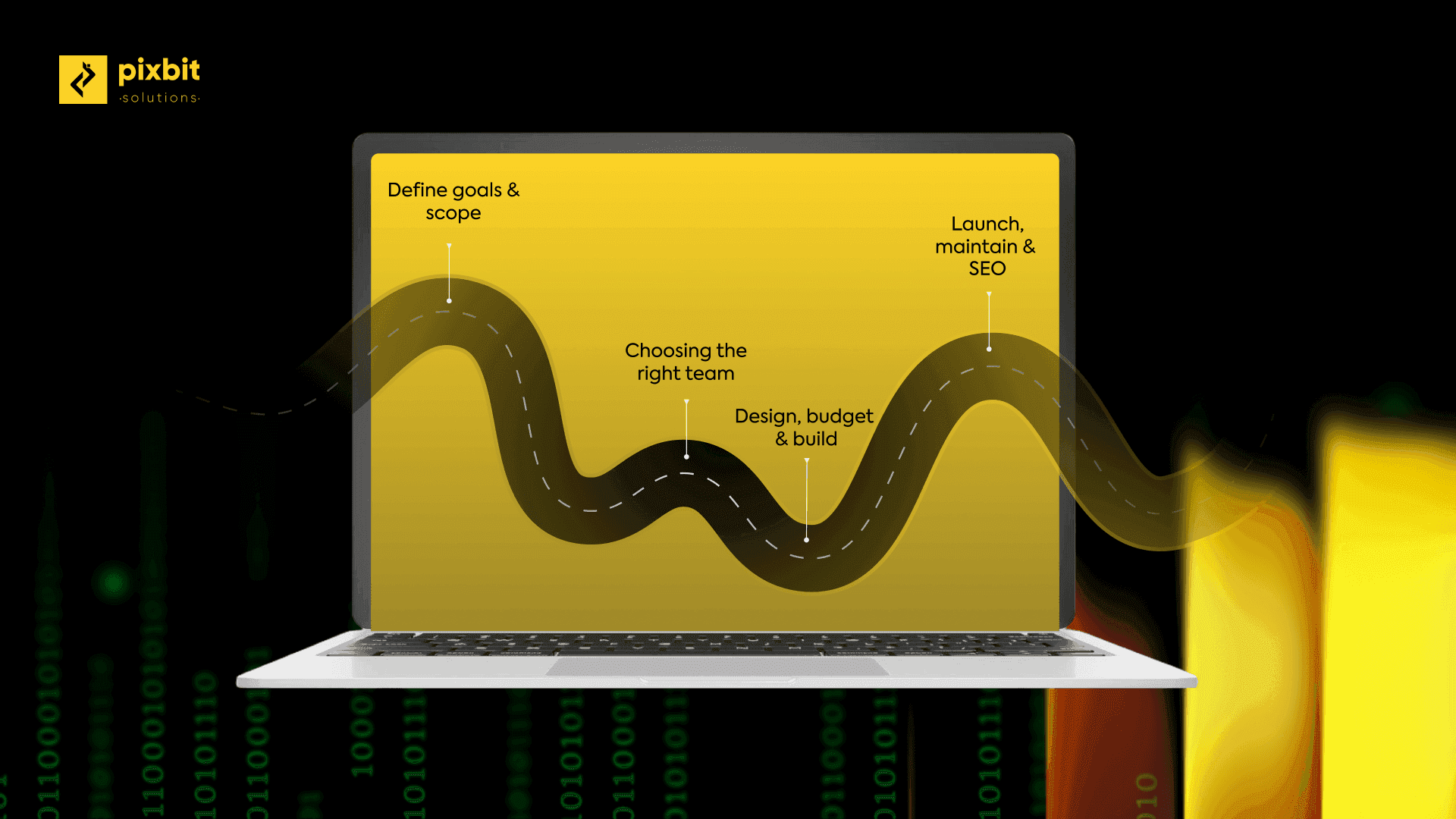
Look for a fixed scope document that lists pages, templates, integrations and revision rounds, plus a simple change request process with a price and a revised date for each addition. Without it, every request becomes a negotiation and the relationship sours long before launch. Our guide to planning a website development project roadmap explains how a clear scope keeps budget and launch date visible.
A site that works on launch day and breaks when a plugin updates or traffic spikes is a common failure, and it usually traces back to an unclear support agreement. Ask what is included after handover, for how long, how quickly urgent issues are fixed and who owns the hosting, domain and source code.
Ownership deserves its own question. You should receive the full source code, CMS admin access, hosting and domain credentials and documentation at handover. If a company keeps the code on its own servers and charges to move it, the low initial quote can cost far more the day you want to change partners.
Quotes for what sounds like the same website can differ widely because the scope underneath them is different. The lowest number often leaves out revision rounds, SEO setup, Arabic layout work, CMS training or post-launch support, and those items return later as extras. We explain the pattern in more detail in why the lowest-priced software development companies in Dubai can cost more.
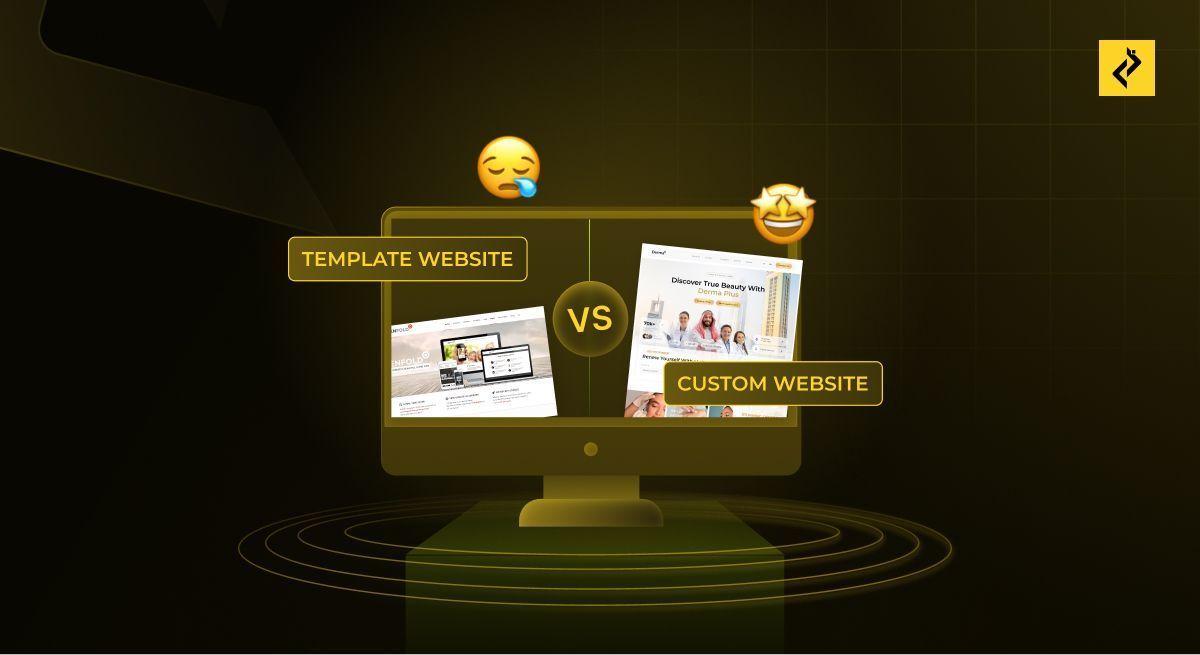
The fair way to compare is to list what each proposal includes before looking at the totals. Two quotes that cover the same pages, integrations, languages, revision rounds and support period are comparable. Two that do not are different projects, however close the numbers look. If you are still deciding between a template and a fully custom build, our comparison of website templates and custom design covers when each makes financial sense.
A web development company plans, designs, builds, tests and launches websites and web applications, then maintains them after launch. In Dubai this usually includes Arabic and English versions, a content management system, CRM-connected lead forms and integrations such as payment gateways or UAE PASS.
Ask for three live websites the company launched in the last year and test them on your phone. Load speed, mobile navigation, complete Arabic pages and working forms reveal more than any portfolio page or client logo wall.
Ask who writes the code, how scope changes are priced, how many revision rounds are included, what support covers after launch and whether you receive the full source code and hosting access at handover.
Usually yes for a business website, because one accountable team handling design, development and content management reduces gaps between handovers. If a company subcontracts development, ask who supports the site after launch.
Most UAE businesses benefit from Arabic and English versions, and government-facing or consumer brands usually need both. The Arabic version should be designed with right-to-left layouts from the start rather than mirrored after the English site is finished.
Pixbit is a web design and development company in Dubai building websites, portals and web applications in Next.js, Laravel and React, with Arabic layouts, CMS training and post-launch support included in every scope. If your project is a company website, see our corporate website development service, and if your team needs to edit content daily, our CMS website development work covers Strapi, Payload and WordPress builds. Budgets usually sit in a mid-range AED band depending on pages, languages and integrations. Pixbit scopes in a single discovery session.

Digital Marketer
Share on
Have an idea that needs to go mobile? Launch it with us!
Let's Talk
Explore insightful articles and tips from our experts on the latest trends in web development and marketing.
Tell us your business aspirations, and let's craft a custom solution that drives business growth, ensuring satisfaction and exceeding your goals with precision.
Let's Talk