
Jewellery ERP Software Development for UAE Businesses
Nabeel Al Nassir
August 19, 2026
8 Min read
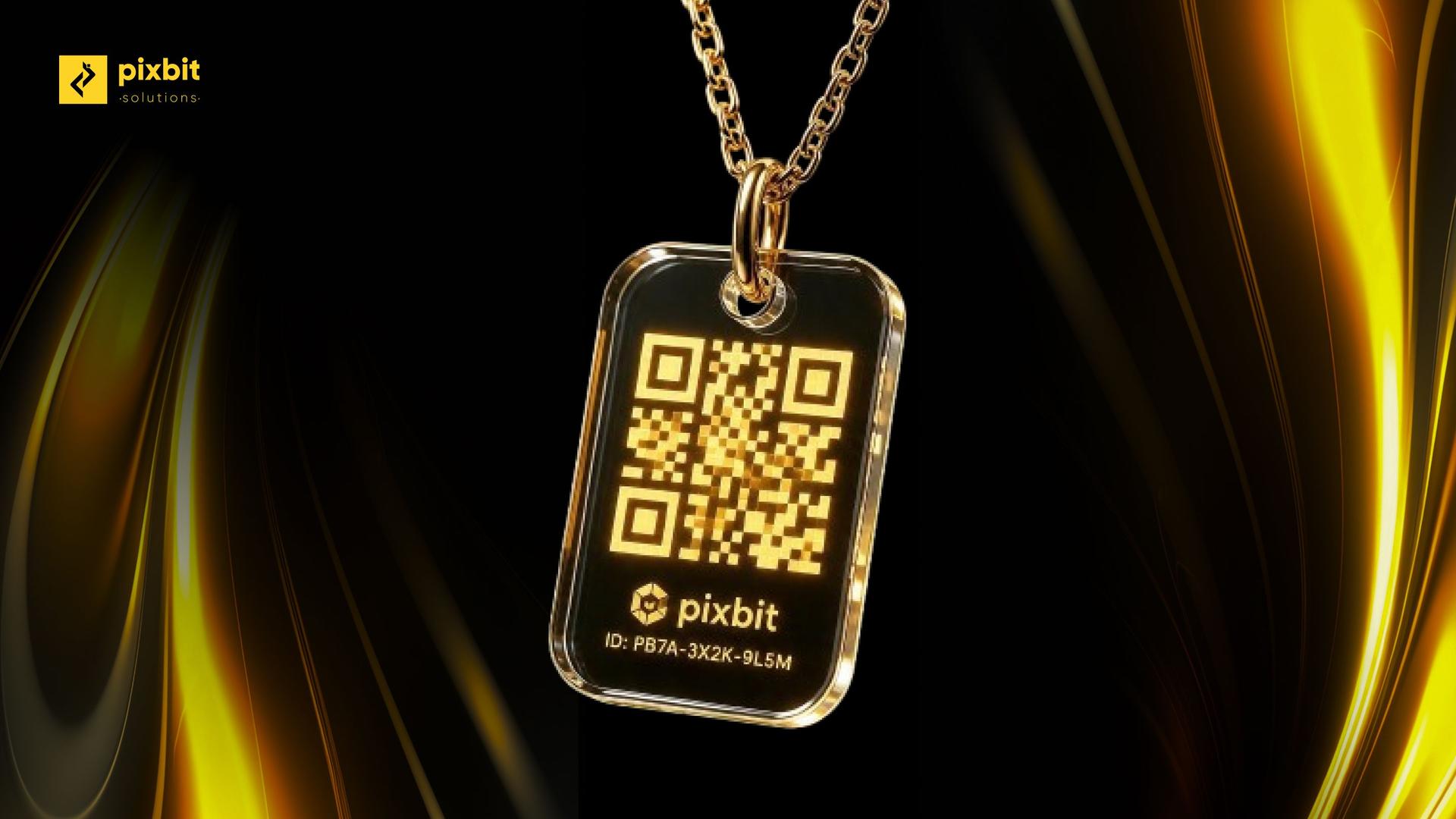
Jewellery ERP software for UAE businesses must model gold and jewellery differently from generic inventory software. It needs purity- and karat-level inventory valuation, gold issued to karigars with wastage accounting, multi-branch stock synchronization, and SKU structures that track design, weight, metal, stones, and related attributes. These requirements affect the underlying data model, pricing engine, stock ledger, production workflows, and integrations rather than simply adding a jewellery module to a conventional ERP.
Why Generic ERP Software Falls Short for Jewellery Businesses
A conventional ERP usually treats inventory as a collection of products with quantities, purchase costs, selling prices, and standard units of measure. That model works well when a product has a relatively stable price and a consistent unit value. Jewellery does not behave that way.
The value of a jewellery item can depend on metal type, purity, gross weight, net weight, stone weight, making charges, wastage, design, and the prevailing gold rate. Two visually similar products can have materially different values because their weights or purity differ. Even the same physical design can have different commercial values depending on its material composition.
Generic accounting software has a related limitation. It can record the financial transaction after the commercial calculation has happened, but the jewellery business needs the software to understand how that calculation was produced. A ledger showing that a ring was sold for a particular amount does not explain its karat, net gold weight, stone weight, making charge, or the gold rate used at the time of sale.
That distinction matters for inventory valuation. A jewellery business cannot treat ten pieces as ten interchangeable units when each piece may have a different weight, purity, design, stone configuration, and valuation basis. The inventory system needs to retain those attributes at item or SKU level.
Generic systems can also struggle with gold issued to a goldsmith or external karigar. Once material leaves the main warehouse for job work, the business still needs to know exactly what was issued, to whom, for which job, in what quantity and purity, what finished goods or material came back, what wastage was recorded, and whether the resulting balance is within the agreed tolerance.
The problem is therefore not simply that generic ERP software has fewer jewellery-specific screens. The deeper issue is that the underlying business objects and transaction rules are different.
What Jewellery Inventory Data Should Track
A jewellery ERP data model should separate the identity of a product from the variables that determine its valuation.
At the product level, the system can store information such as design code, category, collection, manufacturer, description, images, certification references, and other relatively stable attributes. The inventory layer then needs to associate that product with material information such as metal type, purity, gross weight, net metal weight, stone weight, stone type, and applicable charges.
Purity should be a first-class data attribute rather than text entered into a product description. A system should be able to distinguish 18K, 21K, 22K, 24K, or other supported purity categories according to the business's actual inventory. The corresponding fineness value can also be stored where required for calculations and reporting.
Weight should similarly be structured rather than embedded in a product name. Gross weight, stone weight, other material weight, and net gold weight may have different accounting and pricing implications. The system should retain the relationship between these values instead of treating them as independent notes.
Design must also remain searchable independently of physical stock. A retailer may have the same design available in different weights, sizes, colours, or purity categories. The catalogue therefore needs a design master that can generate or associate multiple stock records rather than forcing every variation into an unrelated product entry.
This becomes particularly important for businesses combining retail, wholesale, and manufacturing. The same design may begin as a production specification, become a finished-goods SKU, move into a warehouse, transfer to a showroom, appear on an e-commerce storefront, and eventually be sold through a POS. The software needs to preserve the identity and material history of that item throughout the lifecycle.
A jewellery ERP should also distinguish between quantity-based and weight-based inventory movements. A transfer might involve ten pieces, but the corresponding gold weight and purity must remain visible. A manufacturing transaction may involve material weight without finished-piece quantities being known until production is completed.
This is why the inventory ledger should record every movement as a structured transaction rather than simply overwriting the current stock balance. Purchases, transfers, sales, returns, manufacturing consumption, karigar issues, job-work returns, adjustments, and stock counts should create traceable entries.
The result is an inventory model in which the current balance is calculated from transaction history, while each transaction preserves the relevant weight, purity, design, location, and valuation information.
How Karigar and Job-Work Tracking Should Work
Goldsmith and karigar workflows create one of the biggest differences between jewellery ERP software and conventional inventory systems.
When a jewellery business issues gold to a karigar, the system should create a controlled material transaction. That transaction needs to identify the source location, recipient, issue date, job reference, metal type, purity, gross material weight, and any other information required by the business.
The software should then treat the issued material as being outside the originating stock location but still under the business's accountability. Simply reducing warehouse stock without creating a corresponding karigar balance creates a reconciliation problem.
A job-work record can connect the material issue to a production requirement. The job may specify the design to be produced, expected finished weight, permitted wastage, labour or making charge, delivery date, and applicable instructions. The system can then compare what was issued against what was returned.
Suppose a workshop issues a defined quantity of 22K gold for manufacturing a necklace. When the finished item returns, the ERP should record the finished product, returned scrap or recoverable material where applicable, and the measured wastage. The system can then calculate the difference between issued material and accounted material.
Wastage should not be treated as an unexplained stock adjustment. The ERP should store the agreed tolerance or rule against the job and compare the actual result with that rule. If the recorded wastage exceeds the permitted level, the system can flag the transaction for review instead of silently changing inventory.
This creates accountability without forcing the finance team to reconstruct the production history from spreadsheets.
The same workflow can support multiple karigars and job types. A manufacturer may have different wastage rules, making charges, production stages, or accountability requirements depending on the type of work. These rules should therefore be configurable rather than embedded permanently into the application.
The job-work ledger should also support partial returns. A karigar may return some completed pieces while retaining material for another stage of production. The system needs to maintain the outstanding balance and prevent the entire issue from being treated as completed.
For manufacturers, this structure also creates a connection between raw-material inventory and finished-goods inventory. For retailers using external job workers for repairs or customisation, the same principle can be applied to repair orders and customer-owned items.
The key requirement is traceability. At any point, management should be able to determine where issued gold is, which job it belongs to, who is accountable for it, what has been returned, and what remains outstanding.
How Multi-Branch Jewellery Stock Should Be Structured
Multi-branch operations create another challenge because jewellery stock is valuable, movable, and often distributed across showrooms, warehouses, manufacturing units, and temporary locations.
A basic ERP may maintain a single stock balance for the company and record branch information as an additional field. That is insufficient when management needs to know exactly where a specific item is currently held.
The inventory architecture should treat each warehouse, showroom, manufacturing facility, and other controlled location as a distinct stock location. Every transfer should create an outbound transaction at the source and an inbound transaction at the destination, preferably linked through a single transfer reference.
This allows the system to distinguish between stock that has actually arrived at another branch and stock that is still in transit.
A branch transfer workflow can therefore move an item through states such as dispatched, in transit, received, and reconciled. The receiving branch can confirm the physical quantity and weight against the transfer document before the system closes the movement.
This becomes even more important when branches operate different sales channels. A customer may purchase through a website and collect from a showroom, while another customer may reserve an item in one branch and complete the transaction in another. The central inventory service needs to understand both physical location and sales-channel reservation.
Stock synchronization should therefore be transaction-driven rather than based on periodic spreadsheet imports. When a product is sold, transferred, reserved, returned, or adjusted, the relevant inventory event should be propagated to connected systems.
A centralized inventory API can serve the e-commerce storefront, POS terminals, mobile applications, CRM, warehouse dashboards, and management reporting layer. This reduces the risk of separate systems showing different availability.
For larger businesses, the architecture should also account for concurrency. Two branches or sales channels should not be able to confirm the same unique stock item simultaneously. Reservation and transaction locking rules are therefore part of the inventory design rather than an optional technical refinement.
How Live Gold Rates Fit Into Jewellery ERP Pricing
Jewellery pricing requires a different relationship between catalogue data and selling price.
A conventional retail system can store a fixed price against a product. A jewellery ERP needs to calculate the current value from product attributes and market data. That calculation may combine the applicable gold rate with net gold weight, purity, making charges, gemstone value, wastage rules, and the business's configured pricing policies.
Pixbit's existing guide on Gold Rate API Integration for UAE Jewellery E-Commerce explains how a centralized pricing service can connect live market data with e-commerce, POS, and quotation systems.
Within an ERP, the same principle can be extended beyond the storefront. The gold-rate service should become a shared source for POS pricing, quotations, wholesale pricing, manufacturing calculations, and other workflows that depend on current market rates.
The rate should be stored with its source, timestamp, purity mapping, and validity information. This gives the business a historical record of which market rate was used for a particular transaction or quotation.
The pricing engine should also separate market-driven values from relatively stable product attributes. A design record does not need to be rewritten every time the gold rate changes. Instead, the pricing layer can use the latest validated rate against the existing inventory attributes.
This architecture becomes especially useful when the business has thousands of SKUs. Requiring staff to manually edit the selling price of every item whenever the gold rate changes creates unnecessary administrative work and increases the possibility of inconsistent pricing.
Quotation management should use the same pricing engine but introduce a price-lock mechanism. A quotation can record the gold rate, calculation timestamp, pricing components, and expiry time. Once the quotation expires, the system can recalculate it using the latest approved rate.
The UAE tax treatment of precious metals, stones, and jewellery also needs to be handled as a configurable tax layer rather than hard-coded assumptions. Current UAE Federal Tax Authority guidance includes specific rules for qualifying supplies of precious metals, precious stones, and jewellery under the domestic reverse-charge mechanism, subject to applicable conditions.
That means a UAE jewellery ERP should not simply copy a GST-centric jewellery model from another market. Tax treatment should be determined from the applicable UAE rules and transaction type, with the system retaining the relevant tax classification and calculation inputs. The UAE Federal Tax Authority VAT legislation should remain the reference point as requirements change.
Off-the-Shelf Jewellery ERP vs. Custom Build
Off-the-shelf jewellery ERP products can be a sensible choice when the business's processes closely match the assumptions already built into the product. Established vendors offer packaged systems for jewellery retail, wholesale, manufacturing, inventory, billing, and related workflows. For a business with a straightforward operating model, adopting an existing product can reduce implementation time and avoid building standard functionality from the ground up.
The decision becomes less straightforward when the operating model differs from the product's standard workflow.
A retailer with a particular multi-branch structure may need stock transfers, reservations, approvals, and reporting to operate differently from the packaged workflow. A business combining retail showrooms with its own manufacturing operation may require a single data model that connects customer sales, production, karigar accountability, raw materials, finished goods, and branch inventory.
Existing technology can create another constraint. A jewellery company may already have an e-commerce platform, CRM, accounting system, POS network, warehouse system, or reporting environment that needs to remain in place. Replacing every surrounding system simply to fit an ERP product can create a larger migration project than expected.
Established jewellery ERP products can provide significant industry-specific functionality out of the box, so the right comparison is not "generic software versus custom software." It is whether the packaged product can support the business's actual workflows without excessive workarounds.
Custom development becomes more relevant when the business needs its own data model, integrations, approval rules, pricing engine, branch structure, mobile workflows, or reporting architecture. The custom route also allows the software to be built around existing systems rather than requiring the organisation to reorganise its operations around the software.
The trade-off is that custom development requires more planning, architecture work, testing, migration effort, and ongoing ownership. A discovery exercise should therefore identify which functions genuinely need customisation and which can be handled by existing products or integrations.
For UAE jewellery businesses, the best decision is ultimately determined by workflow fit, integration requirements, data ownership, operational scale, and the cost of changing business processes to match a packaged system.
What a UAE Jewellery ERP Architecture Should Connect
A jewellery ERP should not be viewed as an isolated inventory application. Its value comes from connecting the commercial, operational, and financial events that happen around every piece of stock.
The core ERP can provide the central product, customer, supplier, inventory, purchase, sales, manufacturing, job-work, branch, and accounting records. A pricing service can provide current gold rates and calculation logic. POS systems can consume inventory and pricing data while sending completed sales back to the ERP.
E-commerce systems can expose available products and current prices without maintaining a separate stock database. A mobile application can give sales staff access to inventory, customer information, quotations, and product details while remaining connected to the same backend.
Accounting integrations can receive structured financial transactions rather than requiring finance teams to re-enter completed sales and purchases. Reporting systems can then use the same underlying transaction history to produce branch, inventory, profitability, manufacturing, and stock-movement reports.
This architecture also makes future integrations easier because each major capability has a defined responsibility. Inventory remains the source of stock truth, the pricing service handles market-driven calculations, the ERP manages business transactions, and external systems consume or exchange data through controlled APIs.
For a business operating across multiple branches, the architecture should also include role-based access, approval workflows, audit logging, and transaction history. A branch salesperson should not necessarily have the same access as a group finance manager or manufacturing administrator.
These controls are particularly important for high-value inventory. The system should make it possible to determine who created, approved, transferred, adjusted, sold, or received a particular inventory transaction and when the action occurred.
How to Scope a Jewellery ERP Development Project
The first step should be mapping the actual jewellery lifecycle rather than selecting technology immediately.
A retailer should document how an item enters inventory, how its purity and weight are recorded, how it moves between branches, how it is reserved, how it is sold, how returns are processed, and how inventory is reconciled. A manufacturer needs to add raw-material procurement, production planning, gold issues, karigar management, wastage, finished-goods creation, and manufacturing reconciliation.
The business should then identify which existing systems need to remain connected. This may include accounting software, POS systems, e-commerce platforms, CRM, payment gateways, warehouse tools, customer applications, or external pricing services.
The data migration question is equally important. Existing SKU codes, purity classifications, weight records, customer accounts, supplier records, branch stock, historical transactions, and outstanding job-work balances may require cleansing before they can be imported into a new ERP.
The final scope should distinguish between core ERP functionality, integrations, reporting, migration, mobile applications, and future requirements. This prevents a project from becoming an undefined collection of features and makes the development timeline easier to estimate.
For businesses that already have software, an integration-first strategy may also be more appropriate than replacing the entire technology stack. A custom jewellery ERP does not necessarily need to replace every existing application. It can act as the central business layer while continuing to exchange data with systems that already perform well.
Jewellery ERP Software Requirements Summary
| Requirement | What it means | Software implication |
|---|---|---|
| Purity and weight inventory | Jewellery stock must retain karat, fineness, gross weight, net metal weight, stone information, and related attributes. | The inventory data model must support structured material attributes instead of fixed SKU quantities alone. |
| Design-wise SKUs | The same design may exist in different weights, sizes, purity levels, or stone configurations. | Design masters and SKU variants should remain connected without losing item-level stock identity. |
| Karigar and job work | Gold issued for manufacturing or repair must remain accountable until material and finished goods are returned. | The system needs issue, return, wastage, tolerance, partial-return, and reconciliation workflows. |
| Multi-branch inventory | Stock must remain visible by showroom, warehouse, manufacturing unit, and transit status. | Every movement should create linked transfer transactions with branch-level stock balances. |
| Live gold-rate pricing | Selling prices can depend on current gold rates rather than fixed catalogue prices. | A centralized pricing engine should consume validated market data and apply configured pricing formulas. |
| Quotation price locks | Customers need a defined price validity period even when market rates change. | Quotations and carts should store pricing snapshots, timestamps, and expiry rules. |
| UAE tax configuration | Jewellery transactions can require different tax treatment depending on the transaction and applicable UAE rules. | Tax logic should be configurable and maintained against current FTA guidance rather than copied from another market. |
| System integrations | POS, e-commerce, accounting, CRM, mobile apps, and reporting tools may need shared data. | API-based integration should maintain one source of truth for core inventory and transaction records. |
| Audit history | High-value stock movements need traceability from issue to sale or return. | The platform should retain transaction history, user actions, approvals, and timestamps. |
Frequently Asked Questions
What is jewellery ERP software?
Jewellery ERP software is a business management system designed around jewellery-specific inventory, pricing, sales, purchasing, manufacturing, job work, branch operations, and accounting workflows. Unlike generic ERP software, it can model purity, weight, design, gold issues, wastage, and jewellery-specific valuation rules.
Why does a jewellery business need a specialised ERP?
A jewellery business needs specialised ERP software because inventory value depends on attributes such as purity, weight, design, stones, making charges, and current gold rates. Generic ERP and accounting systems may record transactions but often do not model these variables deeply enough for jewellery operations.
What should jewellery ERP software track for karigar job work?
The system should track gold issued to the karigar, purity, weight, job reference, expected output, agreed wastage or tolerance, returned material, finished goods, outstanding balances, and reconciliation results. This creates accountability throughout the job-work cycle.
Should jewellery ERP software integrate with a live gold rate API?
Yes, when product pricing depends on current market rates, the ERP should connect to a validated gold-rate source through a centralized pricing service. The same pricing logic can then support POS, e-commerce, quotations, and other sales channels.
Is custom jewellery ERP software better than an off-the-shelf product?
Custom jewellery ERP software can be a better fit when a business has specific multi-branch workflows, retail and manufacturing operations, existing systems that must remain connected, or pricing and reporting requirements that packaged software cannot accommodate without major changes. Off-the-shelf products can be appropriate when their existing workflows closely match the business.
Conclusion
Jewellery ERP software for the UAE needs to model the business around material, weight, purity, design, movement, production, pricing, and accountability rather than treating jewellery as conventional fixed-price inventory. The strongest architecture connects inventory, karigar workflows, branches, live gold rates, POS, e-commerce, accounting, and reporting through a shared transaction model.
The right implementation depends on how the jewellery business actually operates. A packaged ERP may be sufficient when its workflows match the organisation. A custom platform becomes more relevant when the business needs its own data model, integrations, branch structure, manufacturing processes, or pricing rules.
Pixbit Solutions develops custom business software using Laravel, React, Next.js, and Flutter, with scope determined by the required workflows, integrations, migration effort, and reporting needs. Exact cost and timeline depend on the system architecture and project scope. Pixbit scopes exact cost and timeline in a single discovery session.

Nabeel Al Nassir
Digital Marketer
Share on
Have an idea that needs to go mobile? Launch it with us!
Have an idea that needs to go mobile? Launch it with us!
Let's Talk
You May Also Like
Explore insightful articles and tips from our experts on the latest trends in web development and marketing.


Have an idea ?
Let's make it happen
Tell us your business aspirations, and let's craft a custom solution that drives business growth, ensuring satisfaction and exceeding your goals with precision.
Let's Talk