
How to Build Mollak-Integrated Property Management Software in Dubai: API Endpoints, RERA Prerequisites, and How to Get Started
Nabeel Al Nassir
May 22, 2026
6 Min read
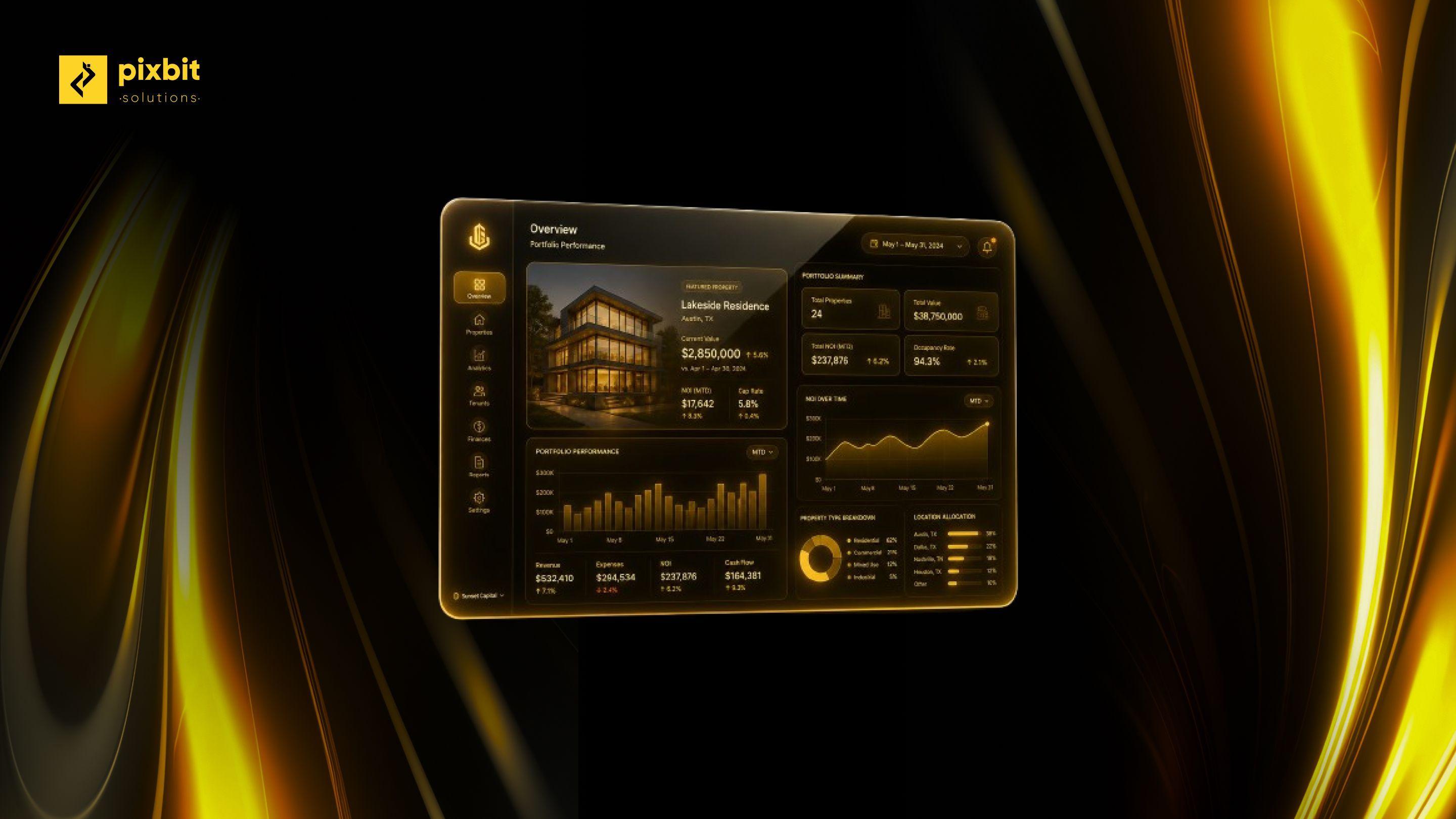
Mollak is Dubai Land Department's centralized system for managing owners' association (OA) service charges, budgets, and financial reporting across Dubai's jointly-owned properties. Every OA and property management company operating in Dubai is required to report service charge collections and expenditures through Mollak, making integration with it a core requirement for any property management software built for the Dubai market — not an optional add-on.
Every service charge transaction for every jointly owned property in Dubai must flow through Mollak. There is no alternative mechanism permitted under Dubai's jointly owned property framework. According to RERA's 2025 OA compliance findings, reserve fund underfunding, budget deviations, and delayed financial reporting remain among the most common compliance failures faced by Owners Associations and OA management companies. In many cases, these failures originate from manual processes, spreadsheet-based reconciliation, and disconnected software systems rather than deliberate non-compliance.
The Mollak API integration software development Dubai market exists to solve exactly these problems. While many OA managers continue entering data manually into the Mollak portal, the Dubai Land Department (DLD) provides integration endpoints that allow budgets, invoices, receipts, ownership records, legal notices, and tenant information to synchronize directly with operational software. This article explains what the Mollak Integration API actually contains, which RERA and DLD prerequisites must be satisfied before development begins, and how a custom platform should be architected from a developer's perspective.
Mollak operates as part of Dubai Land Department's broader digital infrastructure. For the full picture of DLD's API ecosystem beyond Mollak — including Ejari, Oqood, and Trakheesi — see our DLD API Gateway guide.
What the Mollak API Actually Contains — The 7 Endpoints Explained
Budget Sync API
The Budget Sync API synchronizes annual service charge budgets between the OA management platform and Mollak. Before any service charge invoices can be legally issued to owners, the proposed budget must be submitted to Mollak and approved through the RERA review process.
Without Budget Sync integration, finance teams manually re-enter approved budgets into multiple systems, creating discrepancies between internal accounting records and Mollak's official figures. Even small differences can create audit complications during annual reviews.
Receipt Sync API
The Receipt Sync API exchanges payment receipt information between Mollak and the management platform. Whenever an owner pays service charges through approved channels, both systems should reflect identical payment records.
Without automated synchronization, reconciliation becomes a recurring operational burden. Finance teams spend significant time matching payment references, correcting ledger differences, and resolving audit questions regarding receipt history.
Invoice Sync API
The Invoice Sync API synchronizes service charge invoices generated by the management platform with Mollak's official records. Every invoice issued to a property owner should have a corresponding record inside Mollak.
When invoice values differ between systems, OA managers risk reporting inconsistencies during compliance reviews. Automated synchronization ensures owners, auditors, RERA reviewers, and management staff reference the same financial data.
Community Tenants API
The Community Tenants API imports tenant information from Mollak into the operational platform. This endpoint becomes particularly important when OA managers also oversee tenancy administration or resident services.
Accurate tenant records influence occupancy tracking, communication workflows, access management, maintenance coordination, and compliance reporting. Manual updates frequently introduce inconsistencies between operational databases and Mollak records.
Owner Sync API
The Owner Sync API synchronizes ownership information between DLD records, Mollak, and the management platform. Unit ownership changes resulting from sales, inheritance transfers, corporate restructuring, or legal transactions can be reflected automatically.
Owner information affects billing calculations, voting rights, service charge allocation, communication preferences, and financial reporting. Maintaining a single source of truth significantly reduces administrative effort while improving data accuracy.
Additional Invoice API
Not every charge originates from the annual service charge budget. Emergency repairs, insurance adjustments, major capital works, and special levies may require separate approval and invoicing procedures.
The Additional Invoice API manages these exceptional billing events while maintaining compliance with Mollak's financial records. Without dedicated integration, tracking extraordinary charges becomes significantly more complex.
Legal Notice API
The Legal Notice API supports the formal process of recovering unpaid service charges. In Dubai's jointly owned property framework, legal recovery procedures begin with documented notices recorded through approved channels.
Integration allows arrears management workflows to generate notices directly from the platform while maintaining a verifiable compliance trail. This eliminates duplicate data entry and ensures legal documentation remains consistent across systems.
Virtual Account API and Banking Integration
Financial institutions approved within the Mollak ecosystem can utilize the Virtual Account API to exchange service charge information and payment-related data. Platforms that integrate banking functionality can use this endpoint to improve payment reconciliation, balance verification, and transaction visibility.
For larger portfolios managing multiple communities, direct banking integrations reduce reconciliation effort while improving financial transparency across service charge collections.
Why Modular API Architecture Matters
RERA periodically updates Mollak APIs as regulations, reporting requirements, and operational processes evolve. A platform that embeds endpoint logic directly throughout the application creates maintenance challenges every time schemas change.
The correct approach abstracts each Mollak endpoint behind internal service modules. Budget synchronization, receipt management, ownership updates, legal notices, and tenant synchronization operate independently. When DLD updates a specific endpoint, only the corresponding service layer requires modification rather than the entire application.
This modular architecture is one of the reasons mature SaaS platforms remain maintainable over long periods. Any custom build intended for production deployment should follow the same principle from the beginning.
The 3 Prerequisites Most Developers Miss
Many development projects fail before integration begins because critical DLD prerequisites are treated as implementation details rather than project requirements.
Correct DED Trade Licence Activities
The DLD API Gateway requires specific activities on the company's DED trade licence. Property management, jointly owned property management, and related operational activities must be correctly registered before API access can be approved.
Many organisations begin platform development only to discover their licence structure does not satisfy integration requirements. Resolving licence activity issues can delay projects by several weeks.
FTA Accredited Software Vendor Requirement
One of the most frequently overlooked requirements involves accounting and invoicing functionality. Where the platform generates invoices and financial records associated with service charges, the accounting module must comply with Federal Tax Authority requirements.
For production-grade deployments, accreditation considerations should be reviewed before development starts. Building an invoicing system without understanding accreditation obligations can create costly redesign requirements later in the project lifecycle.
Association With a RERA-Licensed JOP Management Company
Software vendors cannot independently obtain production Mollak access simply because they are building property management software. Integration occurs on behalf of a RERA-licensed Jointly Owned Property management company or an authorised operating entity.
This requirement affects sandbox access, testing procedures, deployment approvals, and production rollout planning. Development projects should establish the operational partner relationship before architecture decisions are finalized.
The implication is straightforward. A project that begins without validating all three prerequisites may arrive at the integration phase only to discover production access cannot be approved. Prerequisite verification should be the first project milestone rather than the final deployment task.
Why OA Management Companies Outgrow ADDA
ADDA remains one of the most recognized Mollak-integrated platforms in the UAE market and deserves credit for pioneering direct Mollak connectivity. For many smaller communities, the SaaS model offers a practical starting point.
The economics change as portfolios grow. At approximately AED 15 per unit per month, a portfolio containing 2,000 units can generate annual licensing costs of around AED 360,000 without creating any proprietary intellectual property for the management company.
A custom platform typically begins delivering financial return within 18 to 30 months for portfolios of this scale. Beyond cost, customization becomes increasingly important when managing mixed-use developments, commercial strata projects, master communities, or portfolios requiring white-label deployment capabilities.
Standard SaaS platforms optimize for common use cases. Large operators often require specialized workflows, custom reporting structures, unique budgeting processes, advanced approval hierarchies, and integration requirements that extend beyond what standardized products support.
For mixed-use developments facing complex VAT allocation challenges between residential and commercial components, additional customization often becomes unavoidable.
The 10 Core Modules a Mollak-Integrated Platform Must Include
Service Charge Billing Engine
The billing engine forms the operational foundation of the platform. Budget preparation workflows connect to the Budget Sync API, while invoice generation and payment reconciliation depend on Invoice Sync and Receipt Sync integrations. Every financial transaction must remain traceable back to approved budget allocations.
Owner and Unit Registry
Ownership information originates from DLD and Mollak records through Owner Sync integration. The module maintains ownership history, unit allocations, ownership percentages, identification records, and service charge calculation factors throughout the lifecycle of each property.
Tenant Management
Tenant administration relies on Community Tenants API synchronization alongside tenancy records, occupancy tracking, Ejari references, and resident communication workflows. Accurate occupancy information improves operational visibility while reducing data inconsistencies.
Reserve Fund Management
Reserve funds must remain segregated from general operational funds. The platform should maintain separate ledgers, contribution calculations, lifecycle projections, reserve adequacy reporting, and RERA-compliant reserve fund documentation.
Arrears and Legal Notice Management
Payment delinquency management requires automated monitoring, escalation workflows, communication tracking, and Legal Notice API integration. Administrators should have complete visibility into recovery timelines and outstanding balances across the portfolio.
RERA Compliance Reporting
Compliance reporting converts operational activity into regulator-ready outputs. Budget performance, reserve fund status, expenditure allocation, audit trails, and annual reporting requirements should be generated automatically using live platform data.
Maintenance and Work Orders
Maintenance expenditures directly affect approved service charge budgets. Every work order should connect to budget categories, contractor records, approval workflows, and expenditure tracking to ensure spending remains aligned with approved allocations.
Owner Communication Portal
Owners increasingly expect digital access to statements, maintenance requests, AGM notices, resolutions, and financial information. The portal should expose the same verified data synchronized through Mollak rather than maintaining separate owner-facing records.
Financial Accounting
Financial accounting encompasses VAT treatment, bank reconciliation, financial reporting, audit preparation, and corporate tax record retention requirements. Mixed-use developments require additional logic to support VAT apportionment across residential and commercial units. [FUTURE LINK: UAE-1]
Multi-Building Operator Dashboard
Portfolio managers require consolidated visibility across multiple communities. The dashboard should surface filing deadlines, reserve fund health, collection performance, arrears exposure, maintenance expenditure, and compliance status at both building and portfolio levels.
The 5-Step Build Process
1. Prerequisite Audit and DLD API Access Confirmation
The first stage verifies DED licence activities, accreditation requirements, and association with a RERA-licensed JOP management company. If any prerequisite remains unresolved, the project timeline should account for the additional approval period before development progresses.
2. API Integration Design and Sandbox Access
Each Mollak endpoint is mapped to corresponding platform functionality. Sandbox credentials are configured, data structures are defined, and the API abstraction layer is designed to isolate future regulatory changes from core application logic.
3. Core Platform Build
Development begins with the service charge billing engine and owner registry because every other module depends on accurate financial and ownership data. Budget Sync, Invoice Sync, Receipt Sync, and Owner Sync integrations are typically prioritized during this stage.
4. Reserve Fund, Arrears, and Compliance Reporting
Reserve fund management, legal notice workflows, compliance dashboards, and automated reporting are implemented next. Historical reporting periods should be tested to validate calculation accuracy before production deployment.
5. Owner Portal, Payment Integration, and UAT
The final phase introduces owner-facing functionality, Noqodi payment integration, and user acceptance testing. Every Mollak endpoint should undergo end-to-end validation using realistic operational scenarios before production launch.
How Much Does a Custom Mollak Integration Cost?
Custom Mollak-integrated property management platforms typically start from approximately AED 80,000 for focused implementations covering core functionality and a limited number of integrations.
Costs increase based on portfolio complexity, number of Mollak endpoints integrated, accounting requirements, owner mobile applications, maintenance workflows, compliance reporting capabilities, and multi-building architecture requirements.
The two largest cost variables are usually the depth of Mollak integration and whether the accounting module requires support for accreditation-related requirements. Exact pricing follows scope definition rather than generic estimates.
If you're evaluating a project, book a discovery call to scope your Mollak integration build before committing to development budgets.
5 Mistakes Dubai OA Managers Make When Building Custom Software
Mistake 1: Starting the Build Before Confirming DLD API Prerequisites
DED licence activities, accreditation requirements, and RERA-authorised operating relationships are project blockers rather than administrative formalities. Discovering prerequisite gaps during integration creates avoidable delays and additional cost.
Mistake 2: Hardcoding Mollak API Endpoints
API schemas evolve over time. Applications that tightly couple business logic to endpoint implementations become expensive to maintain whenever DLD updates integration specifications.
Mistake 3: Building the Owner Portal Before the Billing Engine
A visually impressive portal provides little value if invoice balances and payment histories are inaccurate. Billing accuracy should be validated through Invoice Sync and Receipt Sync integration before owner-facing functionality is developed.
Mistake 4: Ignoring Accreditation Considerations for Invoicing
Service charge invoicing intersects with tax compliance obligations. Failing to account for accreditation requirements during architecture planning can force major redesign work after development is substantially complete.
Mistake 5: Building for the Current Portfolio Without Multi-Building Architecture
Most growing OA management companies expand their building portfolio over time. Database structures designed around a single community often require extensive reengineering when multi-building operations become necessary.
Why Pixbit Solutions
Pixbit Solutions develops enterprise-grade operational platforms using Laravel, React, Next.js, Flutter, PostgreSQL, and cloud-native infrastructure. Our modular development approach prioritizes maintainability, scalability, and integration readiness from the earliest architecture stage.
Our experience includes property management platform Pixbit delivered, unified property management case study, enterprise operational systems, financial workflow platforms, and custom business applications serving clients across multiple industries and regions.
We also build CRM development, owner and tenant management module functionality alongside property operations software. Every project begins with technical discovery, process mapping, integration analysis, and architecture planning before implementation starts.
Getting Started
Mollak integration projects succeed when regulatory requirements, architecture decisions, and operational workflows are aligned from day one. The API layer is only one component; licensing prerequisites, accounting requirements, financial controls, and reporting obligations are equally important.
If you're evaluating a custom Mollak-integrated platform for your OA management business or your real estate portfolio, book a discovery call with Pixbit Solutions — we scope the DLD API integration and full platform architecture in a single session.

Nabeel Al Nassir
Digital Marketer
Share on
Have an idea that needs to go mobile? Launch it with us!
Have an idea that needs to go mobile? Launch it with us!
Let's Talk
You May Also Like
Explore insightful articles and tips from our experts on the latest trends in web development and marketing.


Have an idea ?
Let's make it happen
Tell us your business aspirations, and let's craft a custom solution that drives business growth, ensuring satisfaction and exceeding your goals with precision.
Let's Talk