
Shopify vs Salla vs Custom: What UAE and Saudi Brands Should Build
Nabeel Al Nassir
November 4, 2026
7 Min read
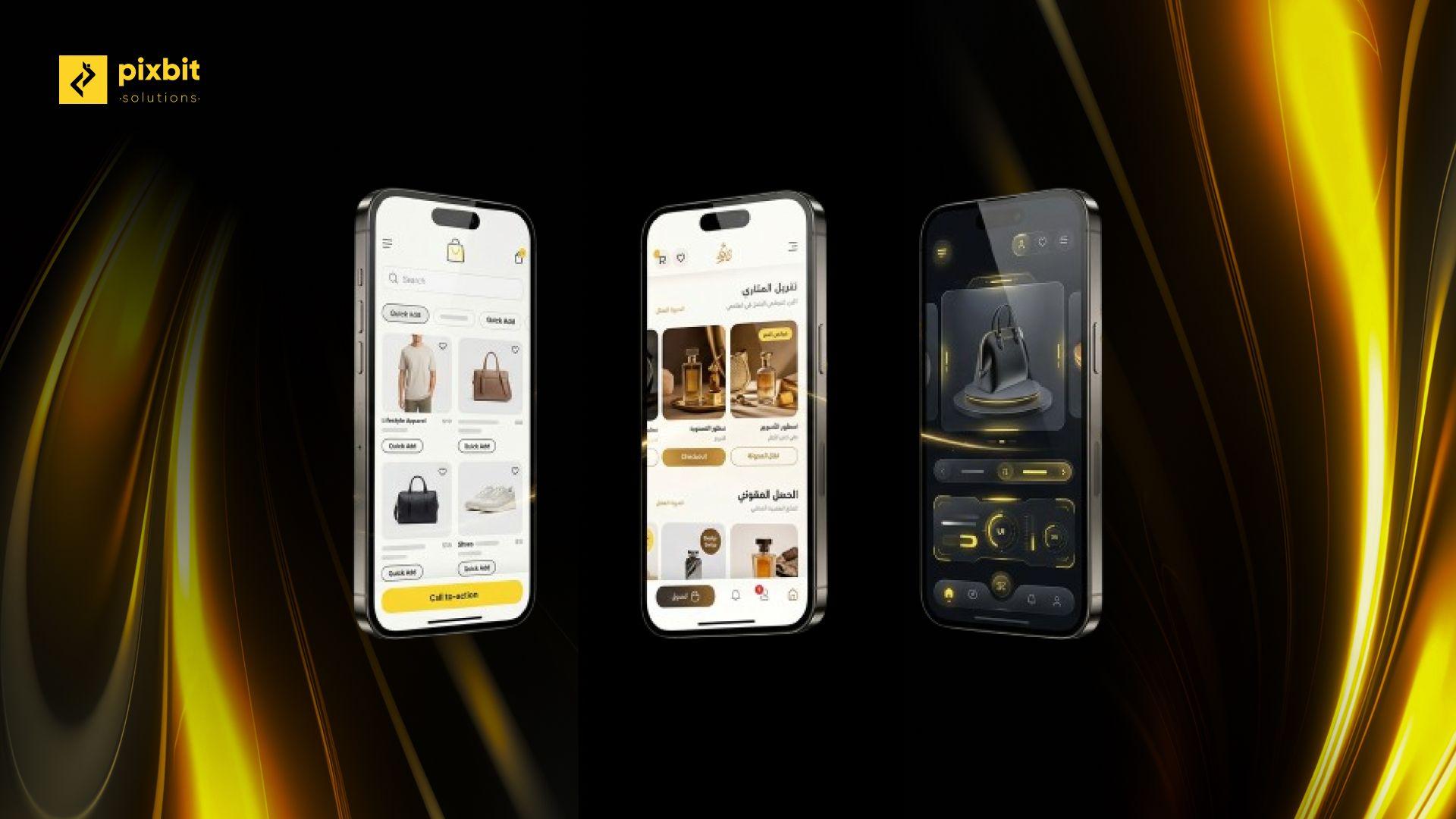
Shopify suits UAE and Saudi brands that want to launch quickly with a large app ecosystem and accept platform limits on checkout and data. Salla suits brands centred on Saudi Arabia that want Arabic-first selling, mada, Tabby, Tamara and ZATCA-ready invoicing built in. A custom store suits brands that need ERP integration, complex pricing, B2B ordering or full ownership of checkout and customer data.
The Real Question Behind the Platform Choice
Brands in the UAE and Saudi Arabia usually frame this as a features comparison, but the decision is really about three things: how much of the business the platform has to run, how much control you need over checkout and data, and how much ongoing cost you are willing to carry in subscriptions, apps and transaction fees. A fashion label selling a few hundred products to consumers has very different needs from a building-materials supplier that needs trade pricing, credit terms and a live link to SAP Business One or Odoo.
The other factor specific to this region is geography. A store selling mainly in the UAE has different payment, language and invoicing requirements from one where most orders come from Riyadh and Jeddah. Getting that split right early avoids a replatforming project eighteen months later.
Shopify for UAE and Saudi Brands
Shopify is the most widely used hosted platform among Gulf direct-to-consumer brands, largely because it is quick to launch, has a deep theme and app marketplace, and is familiar to agencies and marketing teams. Arabic storefronts are possible through themes and translation apps, and multi-currency selling is supported through Shopify Markets.
Payments are the main area to check. Shopify Payments is available to UAE merchants on the Advanced plan, subject to Shopify's verification; merchants on other plans connect a local gateway through Shopify's payment apps. For Saudi customers, mada support depends on the gateway you connect. Shopify's limits also show up in checkout customisation on lower plans, in reliance on paid apps for features such as Arabic translation, B2B pricing or advanced shipping rules, and in the way monthly costs build up as the app list grows.
Shopify is a strong fit for consumer brands with standard catalogues and promotions, teams that want to manage the store themselves, and businesses that value speed to market over deep customisation.
Salla for Saudi-Focused Selling
Salla is a Saudi e-commerce platform built for the local market, and it has expanded its coverage to UAE merchants and the wider GCC. Its main advantage is that it is Arabic-first and designed around how Saudi customers pay and receive orders. It supports mada, STC Pay, Apple Pay and major cards, connects to Tabby and Tamara for instalments, and states that it is compliant with ZATCA e-invoicing requirements, which matters for any business registered for VAT in Saudi Arabia. Its app store offers integrations for marketing, shipping, accounting and ERP tools, and it provides an open API for developers.
Salla is a strong fit for brands whose customers are mainly in Saudi Arabia, teams that want an Arabic-native admin experience, and merchants that want local payment methods and invoicing without assembling them from separate apps. It is less suited to brands whose main markets sit outside the GCC, or to businesses that need checkout logic and integrations beyond what its API and app store support.
When a Custom Store Makes More Sense
A custom store, typically built with Next.js on the front end and a headless commerce engine or a Laravel back end, gives the business full control over checkout, pricing, data and integrations. It becomes the better option when the store is tightly connected to other systems or when the business model does not fit a hosted platform.
The clearest triggers are a live connection to an ERP such as SAP Business One or Odoo for stock, pricing and orders; B2B selling with trade accounts, credit limits, quotations and customer-specific price lists; complex product logic such as configurable products, gold-rate pricing or made-to-order items; multi-brand or multi-country operations that need one back office; and a need to own customer and order data fully for analytics and loyalty. Our jewellery e-commerce platform guide shows how live pricing and stock requirements like these shape a custom build.
The trade-off is that the business takes on hosting, security, updates and future development, and the first release takes longer than launching on a platform. That is why a custom build is usually justified by integration or business-model requirements rather than by design preferences alone.
Cost Comparison Over Three Years
Platform costs look small at launch and grow with the business. On Shopify, the subscription is only part of the picture; paid apps, premium themes, transaction fees when using a third-party gateway on some plans, and agency work for customisation all add up. On Salla, the subscription and app costs are similar in structure, with the advantage that more Saudi-specific features are included. A custom store has a larger upfront build cost and lower ongoing platform fees, but needs a maintenance and hosting budget.
The fair comparison looks at total cost over three years, including the cost of workarounds. A platform store that needs a team member to re-key orders into the ERP every day, or a chain of apps to handle B2B pricing, has a cost that never appears on the subscription invoice. Pixbit scopes exact cost and timeline in a single discovery session, and the useful output of that session is a three-year cost view for each option rather than a single build quote.
Migrating From Shopify or Salla to Custom
Many Gulf brands start on Shopify or Salla and move to a custom store once integrations, fees or catalogue complexity outgrow the platform. The migration is manageable if it is planned around SEO and customer data. Product URLs, collections and blog content need a full redirect map so search rankings carry over. Customer accounts, order history and saved addresses need to be exported and imported in a way that keeps login and reorder working. Payment tokens for saved cards usually cannot be transferred directly, so customers may need to re-enter cards, which should be communicated in advance. Running the new store in parallel for a short period, with stock and orders syncing to the ERP from both, reduces the risk of lost orders during the cut-over.
Summary: Shopify vs Salla vs Custom
Frequently Asked Questions
Is Shopify or Salla better for a store in Saudi Arabia?
For a store focused mainly on Saudi customers, Salla is often the simpler choice because mada, STC Pay, Tabby, Tamara and ZATCA-ready invoicing are built in and the admin is Arabic-first. Shopify can work well too, especially for brands selling across several countries, but local payment and invoicing features depend on the apps and gateway you add.
Does Salla work for UAE businesses?
Salla has expanded its coverage to UAE merchants and the wider GCC, and it ships to the UAE through its logistics partners. Its feature set is still most closely tailored to the Saudi market, so UAE-focused brands should check payment and shipping options against their own customer base.
When should a brand move from Shopify to a custom store?
The usual triggers are needing a live ERP connection, B2B pricing and trade accounts, complex product logic, multi-country operations from one back office, or app and transaction costs that have grown beyond the cost of owning the platform.
Will we lose SEO rankings if we migrate platforms?
Not if the migration includes a complete redirect map for products, collections and content, keeps metadata and structured data intact, and is monitored in Google Search Console after launch.
Choosing the Right Setup
The right platform is the one that fits where most of your customers are, how your products are priced and which systems the store has to talk to. Pixbit builds e-commerce stores for UAE and Saudi brands, from platform setups and integrations to fully custom Next.js stores connected to ERP systems. For checkout and payment choices, see our comparison of payment gateways for UAE online stores. Pixbit scopes exact cost and timeline in a single discovery session, so book a discovery session to compare the options for your brand.

Nabeel Al Nassir
Digital Marketer
Share on
Have an idea that needs to go mobile? Launch it with us!
Have an idea that needs to go mobile? Launch it with us!
Let's Talk
Have an idea ?
Let's make it happen
Tell us your business aspirations, and let's craft a custom solution that drives business growth, ensuring satisfaction and exceeding your goals with precision.
Let's Talk