
What UK Home Care Software Needs to Do in 2026
Nabeel Al Nassir
August 7, 2026
5 Min read
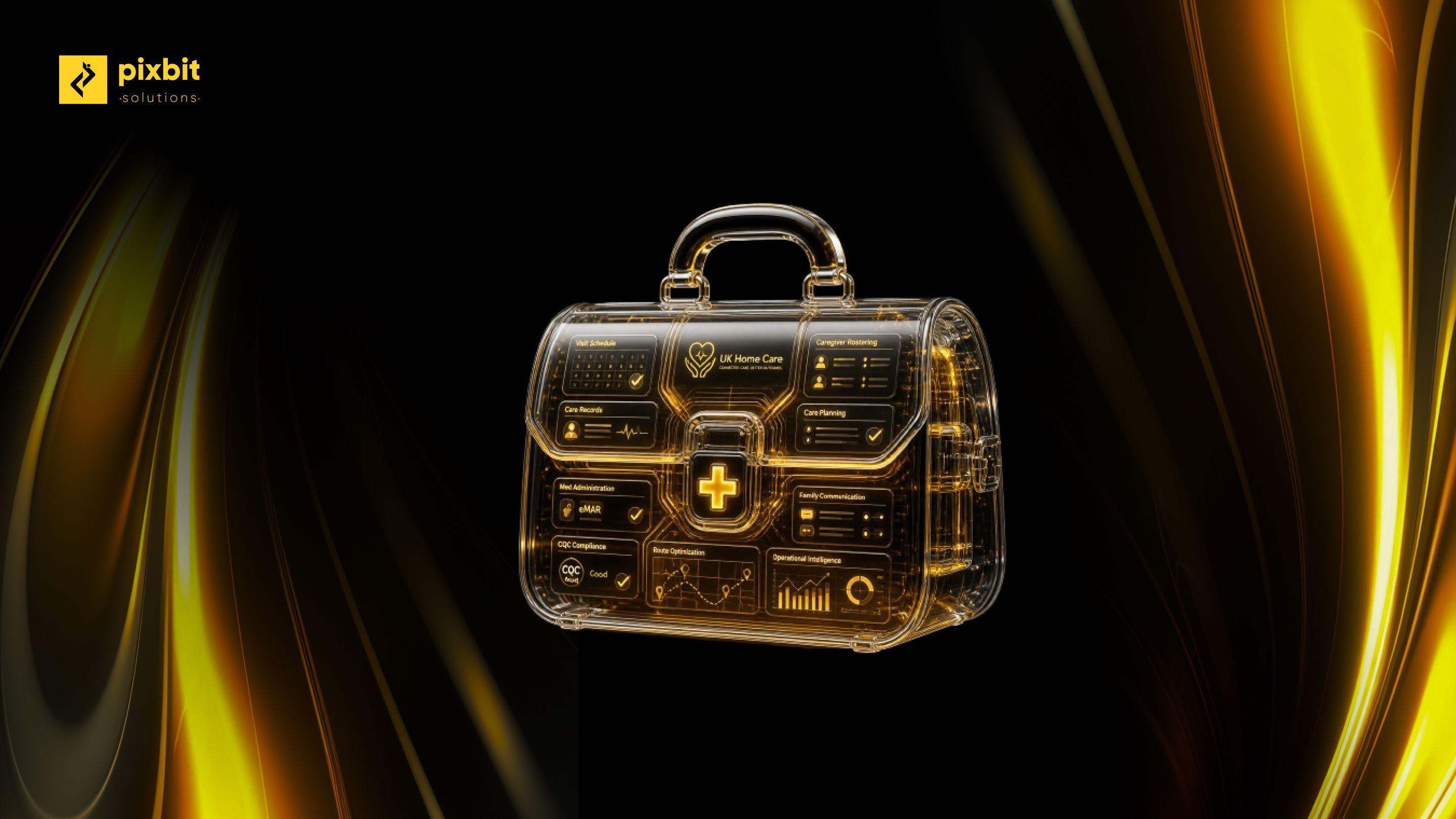
UK home care software has evolved from an administrative convenience into a critical part of regulatory compliance. Driven by NHS England's Digital Social Care Records (DSCR) programme and the July 2026 MODS interoperability milestone, providers are expected to maintain structured, interoperable digital records rather than disconnected paper files or spreadsheets. This guide explains what CQC compliant home care software actually requires from a technical and operational perspective, separating genuine compliance capabilities from marketing terminology.
CQC compliant home care software: What "CQC compliant" actually means
One of the biggest misconceptions in the UK care technology market is that the Care Quality Commission (CQC) certifies software products. It does not. The CQC regulates care providers, not software vendors. When a provider refers to using "CQC compliant home care software," the claim should be understood in the context of how effectively the software enables the organisation to demonstrate compliance during inspection.
Inspectors are interested in evidence. They need to see how care is planned, delivered, monitored, reviewed, and improved over time. Software becomes valuable because it provides a structured, searchable, and auditable record of these activities rather than simply replacing paper with digital forms.
The CQC's assessment framework examines providers across key domains including Safe, Effective, Caring, Responsive, and Well-led. While software alone cannot satisfy these requirements, it plays an increasingly important role in capturing the evidence that supports them. Care plans, medication administration records, visit logs, incident reports, risk assessments, staff observations, and service-user outcomes all contribute to this evidence base.
For that reason, digital records must be more than editable documents stored online. Every significant activity should generate structured information that can be reviewed chronologically and traced back to the individual who performed it. Timestamped updates, authenticated user actions, version histories, and audit trails become essential because they demonstrate not only what information exists but also when it was recorded and how it has changed over time.
This distinction between digitised and structured information is important. A scanned care plan uploaded as a PDF may technically be digital, but it provides little value when organisations need to analyse trends, identify missed interventions, monitor quality indicators, or demonstrate consistent service delivery across multiple clients.
Structured data enables reporting that paper records cannot easily support. Managers can identify overdue reviews, incomplete assessments, missed visits, recurring incidents, medication exceptions, or safeguarding concerns without manually examining hundreds of individual records. During inspections, this allows providers to produce organised evidence rather than assembling documentation retrospectively.
Audit readiness also depends on consistency. Every member of staff should follow the same documentation standards regardless of location or shift pattern. Standardised forms, mandatory validation rules, controlled workflows, and role-based permissions help ensure records remain complete and reliable throughout the care process.
Security is equally important. Home care software routinely contains sensitive personal and health information, making robust access controls, authentication, encryption, and activity logging fundamental components of compliance. Protecting data is not separate from regulatory readiness; it is an integral part of maintaining trust and accountability.
Ultimately, "CQC compliant" should be viewed as an operational capability rather than a product label. The right system enables providers to generate accurate, structured, real-time evidence that supports inspections and day-to-day governance, rather than simply claiming compliance through marketing language.
DSCR and the shift to structured, interoperable records
The Digital Social Care Records (DSCR) programme represents one of the most significant changes to the UK's adult social care technology landscape. While many providers have already adopted digital systems, the objective extends far beyond replacing paper files with electronic documents.
The programme encourages organisations to maintain care records in formats that support interoperability across the wider health and social care ecosystem. Digital information should not remain isolated within individual software platforms. Instead, authorised information should be capable of being exchanged securely with other systems involved in delivering care.
This shift requires a different approach to system design. Traditional digital record systems often functioned as standalone databases containing information entered solely for internal operational purposes. Modern digital care records increasingly need to support structured data models that allow information to be shared accurately without requiring manual re-entry or document conversion.
Consider a routine care assessment. In a paper-based process, observations may exist only as handwritten notes. In an older digital system, those notes may simply become text entered into an online form. A DSCR-aligned approach instead records individual data elements in a structured way so they can be interpreted consistently by different systems when appropriate permissions exist.
This structured approach improves continuity of care because relevant information becomes easier to access across different parts of the health and care system. It also reduces duplication, lowers administrative workload, and helps minimise errors introduced through repeated manual transcription.
For providers, the operational benefits extend beyond interoperability. Structured digital records improve reporting, quality assurance, safeguarding oversight, workforce management, and service planning. Managers gain better visibility into care delivery because information can be filtered, analysed, and reviewed using consistent data rather than relying solely on free-text notes.
Moving to a DSCR-compliant environment also encourages organisations to standardise internal processes. Assessments, care planning, medication records, visit documentation, incident reporting, and review workflows become more consistent across teams, improving both operational efficiency and regulatory readiness.
Importantly, adopting digital social care records should not be viewed as a one-time technology project. Regulatory expectations, interoperability standards, and NHS integration initiatives continue to evolve, meaning providers benefit most from systems designed around structured, standards-based data rather than proprietary document storage.
The transition therefore represents more than software implementation. It reflects a broader move towards connected digital care infrastructure where information can be recorded once, maintained accurately, and exchanged securely across the organisations involved in supporting an individual's care journey.
MODS and FHIR: What interoperability requires technically
Interoperability has become one of the defining requirements for modern home care software. As digital transformation across health and social care accelerates, providers are increasingly expected to use systems that can exchange information consistently with the wider NHS ecosystem rather than operating as isolated databases.
This is where the Minimum Operational Data Standard (MODS) and HL7 FHIR become particularly important.
MODS establishes a common structure for the information that Digital Social Care Record systems should capture and expose. Rather than every software provider storing care information in entirely different formats, the standard promotes a shared data model that makes information more consistent across platforms.
FHIR (Fast Healthcare Interoperability Resources), developed by HL7, provides the technical framework for exchanging that structured information. Instead of relying on proprietary exports or custom integrations for every connection, FHIR defines standardized resources and APIs that allow healthcare systems to exchange information using a common language.
These two standards complement one another. MODS defines what information should be represented, while FHIR defines how that information can be exchanged securely between systems.
From a software architecture perspective, genuine interoperability starts with the underlying data model. Information cannot simply exist as free-text notes or uploaded documents if it is expected to integrate with external systems. Individual care events, medications, observations, allergies, assessments, appointments, staff activities, and service-user details need to be stored as discrete, structured data elements that can be referenced independently.
For example, recording that medication was administered should not simply create a sentence inside a daily care note. Instead, the system should capture structured fields such as the medication, dosage, administration time, administering staff member, outcome, and any associated observations. This allows downstream systems to interpret the information without relying on manual reading or document parsing.
The same principle applies to care plans, risk assessments, safeguarding records, and clinical observations. When information is modeled consistently, it becomes possible to exchange relevant data accurately while preserving meaning across different software environments.
Interoperability also requires stable identifiers throughout the platform. Service users, staff members, visits, medications, assessments, and organisations all require unique references so information exchanged between systems remains traceable and unambiguous.
Security and governance become equally important. Health and care data must only be shared through authenticated, authorised channels, with comprehensive audit trails showing who accessed information, when it was shared, and under what permissions. Modern integration is therefore as much about governance as it is about APIs.
One practical example is GP Connect, which enables approved systems to exchange selected information with GP practices through nationally defined standards. Rather than duplicating patient information or relying on manual communication, integrated systems can retrieve or exchange authorised information using standardized interfaces where appropriate governance arrangements exist.
This broader architecture represents a significant shift from traditional care software. Instead of acting as standalone operational tools, modern platforms increasingly function as participants within a connected digital health ecosystem, capable of exchanging structured information safely and consistently whenever legitimate care workflows require it.
As NHS interoperability initiatives continue to evolve, agencies investing in digital transformation should evaluate software not simply on whether it claims compatibility, but on whether its underlying architecture genuinely supports structured data, standards-based APIs, and future integration requirements.
Core operational requirements beyond compliance
Regulatory compliance is only one part of what determines whether home care software succeeds in day-to-day operations. The practical realities of domiciliary care create logistical challenges that software must address every day, regardless of inspection frameworks or interoperability standards.
Scheduling is one of the most demanding examples.
Unlike residential care, domiciliary services involve carers travelling between multiple homes throughout the day. Effective scheduling therefore requires more than assigning visits to available staff. The platform should account for travel time, geographic proximity, visit duration, contractual hours, staff availability, qualifications, and continuity of care when generating schedules.
Continuity of carer is particularly important because consistent relationships often improve care quality and service-user confidence. Reassigning visits purely for scheduling efficiency can create unnecessary disruption, especially for vulnerable individuals who benefit from familiar carers.
Travel optimisation also affects operational performance. Poor scheduling can result in excessive travel, increased lateness, unnecessary mileage, and reduced time available for direct care. Intelligent scheduling helps agencies balance operational efficiency with workforce wellbeing and client expectations.
Medication management represents another critical operational capability.
Electronic Medication Administration Records (eMAR) should support real-time documentation of medication administration while helping carers identify missed doses, potential exceptions, or follow-up actions immediately. Recording medication after the fact significantly reduces the reliability of clinical documentation, making real-time workflows considerably more valuable.
Alerting mechanisms also contribute to safer operations. Systems should notify carers and supervisors when scheduled medications are overdue, required observations have not been completed, visits are missed, or care tasks remain outstanding. These notifications enable organisations to respond proactively instead of discovering issues during later reviews.
Perhaps the most overlooked operational requirement is offline capability.
Home carers routinely work in environments where mobile signal is inconsistent or unavailable. Rural locations, older buildings, basements, and certain residential areas can all interrupt connectivity. Software that assumes continuous internet access may become difficult—or even impossible—to use during visits.
Reliable mobile applications therefore need to function without a live connection. Care workers should be able to access schedules, review care plans, record visit notes, complete medication documentation, capture observations, and log outcomes while offline. Once connectivity returns, the application should synchronize changes automatically without requiring duplicate data entry or risking data loss.
Offline synchronization introduces additional technical complexity because systems must manage conflicts, preserve timestamps, maintain audit trails, and ensure records remain consistent after synchronization. However, this capability directly reflects the realities of community-based care rather than ideal network conditions.
Ease of use also matters. Carers often document information under significant time pressure while moving between visits. Interfaces should minimise unnecessary navigation, reduce repetitive data entry, and prioritise essential information so documentation supports care delivery instead of interrupting it.
Ultimately, software succeeds not because it satisfies regulatory terminology, but because it enables carers to deliver safe, consistent, and well-documented care under real-world conditions. Compliance features establish the foundation, but operational usability determines whether those features are applied effectively every day.
The purpose-built vs. adapted distinction
One of the most important buying decisions has little to do with feature checklists. It concerns the origin of the software itself and whether it was designed specifically for domiciliary care or adapted from another care setting over time.
Residential care and home care share many operational similarities. Both require care planning, medication management, staff records, incident reporting, compliance documentation, and quality assurance. However, the day-to-day logistics of delivering care in people's homes are fundamentally different from managing a single residential facility.
In a care home, staff, residents, medication, equipment, and documentation exist within a controlled environment. Home care providers, by contrast, coordinate carers travelling across multiple locations throughout the day, often working independently with changing schedules, unpredictable traffic, and inconsistent mobile connectivity.
Software originally developed for residential care may successfully support many compliance requirements while being less effective at handling these operational realities. Visit scheduling, travel optimisation, continuity-of-carer planning, lone working considerations, mileage tracking, and offline mobile workflows often become secondary features rather than core architectural priorities.
This does not automatically make one type of platform better than another. Many established systems continue to evolve successfully across multiple care settings. The important consideration is whether the software's underlying workflows align with the way the organisation actually delivers care.
Buyers should therefore evaluate software by following the complete journey of a care visit rather than comparing feature lists. From referral and assessment through scheduling, travel, visit documentation, medication administration, incident reporting, review, and billing, each stage should feel like part of a coherent workflow rather than a collection of loosely connected modules.
The mobile experience deserves particular attention during evaluation. If carers spend most of their working day away from the office, the mobile application effectively becomes the primary product rather than a companion interface. Navigation, offline reliability, synchronization behaviour, and documentation speed will often have a greater impact on day-to-day operations than the administrative dashboard used by office staff.
Reporting flexibility also differentiates platforms designed around operational workflows. Managers need visibility into missed visits, overdue assessments, medication exceptions, safeguarding concerns, staffing capacity, travel efficiency, and quality indicators without relying on manual spreadsheet compilation. A platform that captures structured operational data naturally supports more meaningful reporting than one built primarily around document storage.
Ultimately, the distinction is not about whether software originated in one care setting or another. It is about whether the platform's architecture and workflows reflect the operational realities of domiciliary care as it is delivered today.
Where off-the-shelf software reaches its limits
For most UK home care agencies, established digital care platforms provide everything required to support regulatory compliance and day-to-day service delivery. Scheduling, electronic care records, medication management, reporting, mobile applications, and interoperability capabilities continue to mature across the market, making standard software the right choice for many organisations.
The need for custom development typically arises only when operational requirements extend beyond what configurable platforms are designed to support.
Large providers operating across multiple regions often need workflows that differ between branches while maintaining central governance and reporting. Independent franchise networks may require shared operational standards alongside local autonomy. Specialist care providers sometimes introduce assessment models, documentation processes, or funding arrangements that differ from standard domiciliary care workflows.
Integration requirements also become increasingly significant as organisations grow.
Many agencies already rely on payroll systems, finance platforms, HR software, customer relationship management tools, workforce management applications, business intelligence platforms, and NHS integration services. While modern care software often includes integration capabilities, not every internal system or operational process fits neatly within standard connector frameworks.
Data migration presents another common challenge. Organisations replacing legacy systems may need to preserve years of historical records, maintain reporting continuity, and support parallel operations during transition. Generic migration tools are not always capable of handling bespoke data structures or organisation-specific workflows.
Some providers also develop unique service delivery models that require software support beyond conventional care management. Multi-disciplinary teams, specialist clinical services, community partnerships, remote monitoring initiatives, or integrated social care programmes can introduce operational requirements that standard platforms were never intended to address.
In these situations, agencies are not necessarily replacing established care software. More commonly, they extend it through custom integrations, dedicated operational portals, reporting environments, automation workflows, or interoperability services that complement rather than duplicate core functionality.
This distinction is important because custom software should solve clearly defined operational problems rather than recreate mature functionality that already exists within proven care platforms.
When evaluating technology, buyers should therefore begin by identifying genuine business requirements rather than assuming bespoke development is inherently more capable. If an organisation's needs align closely with established operational practices, an off-the-shelf platform will often deliver the fastest route to digital maturity.
Where requirements become highly specialised—particularly around interoperability, multi-system integration, complex workflows, or organisation-specific operational models—a tailored solution may become appropriate. The decision should be driven by operational necessity rather than technology preference.
Summary
| Requirement | What "Compliant" Actually Means | What to Verify Before Buying |
|---|---|---|
| CQC audit readiness | Produces structured, real-time, timestamped records with complete audit trails that support evidence across CQC assessment domains. | Review audit logs, version history, role-based permissions, and reporting capabilities instead of relying on compliance claims alone. |
| DSCR digital record standard | Maintains structured digital care records that replace paper-based processes and support consistent data capture across care delivery. | Confirm the system stores structured data rather than simply digitising paper forms or PDFs. |
| MODS/FHIR interoperability | Uses standards-based data models capable of exchanging information through MODS-aligned structures and HL7 FHIR interfaces where required. | Verify current interoperability capabilities, API support, and alignment with NHS England requirements rather than assuming future compatibility. |
| Offline mobile reliability | Enables carers to continue documenting care, medication, and visit activity without network connectivity before securely synchronising data later. | Test offline workflows during product evaluation and understand how the platform handles synchronisation, conflict resolution, and audit trails. |
Frequently Asked Questions
What does "CQC compliant" mean for home care software?
CQC does not certify software products directly. Instead, inspectors assess whether a provider can produce structured, real-time, audit-ready evidence that demonstrates safe, effective, caring, responsive, and well-led services. When evaluating software, focus on whether it supports that level of evidence rather than relying solely on a vendor's compliance claim.
What is the MODS deadline for UK home care software?
According to NHS England's Digital Social Care Records programme, suppliers on the NHS Assured Solutions List are expected to demonstrate compliance with the Minimum Operational Data Standard (MODS) by 1 July 2026. As interoperability requirements continue to evolve, organisations should always verify the latest guidance published by NHS England before making procurement decisions.
Does every home care agency need custom software?
No. Most home care providers are well served by established digital care platforms that already support operational workflows and regulatory requirements. Custom software generally becomes relevant only when agencies have complex multi-region operations, specialist service models, or integration requirements that standard platforms cannot accommodate.
Conclusion
Choosing home care software in 2026 is no longer simply about replacing paperwork. Buyers need to evaluate how well a platform supports structured digital records, interoperability, audit readiness, operational efficiency, and the realities of delivering care in the community. Features such as offline mobile working, intelligent scheduling, eMAR, and standards-based data exchange are becoming increasingly important alongside traditional care management capabilities.
For many providers, an established compliant platform will remain the right choice. Where operational requirements extend beyond standard functionality—whether through complex integrations, bespoke workflows, or interoperability projects—a deeper technical approach may be needed.
At Pixbit Solutions, we work with organisations that need software beyond conventional feature sets. Our experience spans healthcare interoperability, standards-based application architecture, and custom digital platforms that integrate with existing operational systems. Whether extending an existing care platform or building specialist software around unique service models, our focus is on creating solutions that align with both regulatory expectations and the practical realities of care delivery.

Nabeel Al Nassir
Digital Marketer
Share on
Have an idea that needs to go mobile? Launch it with us!
Have an idea that needs to go mobile? Launch it with us!
Let's Talk
You May Also Like
Explore insightful articles and tips from our experts on the latest trends in web development and marketing.
Have an idea ?
Let's make it happen
Tell us your business aspirations, and let's craft a custom solution that drives business growth, ensuring satisfaction and exceeding your goals with precision.
Let's Talk