
WhatsApp Marketing for UAE Apps: The 2026 Growth Playbook
Nabeel Al Nassir
June 5, 2026
4 Min read
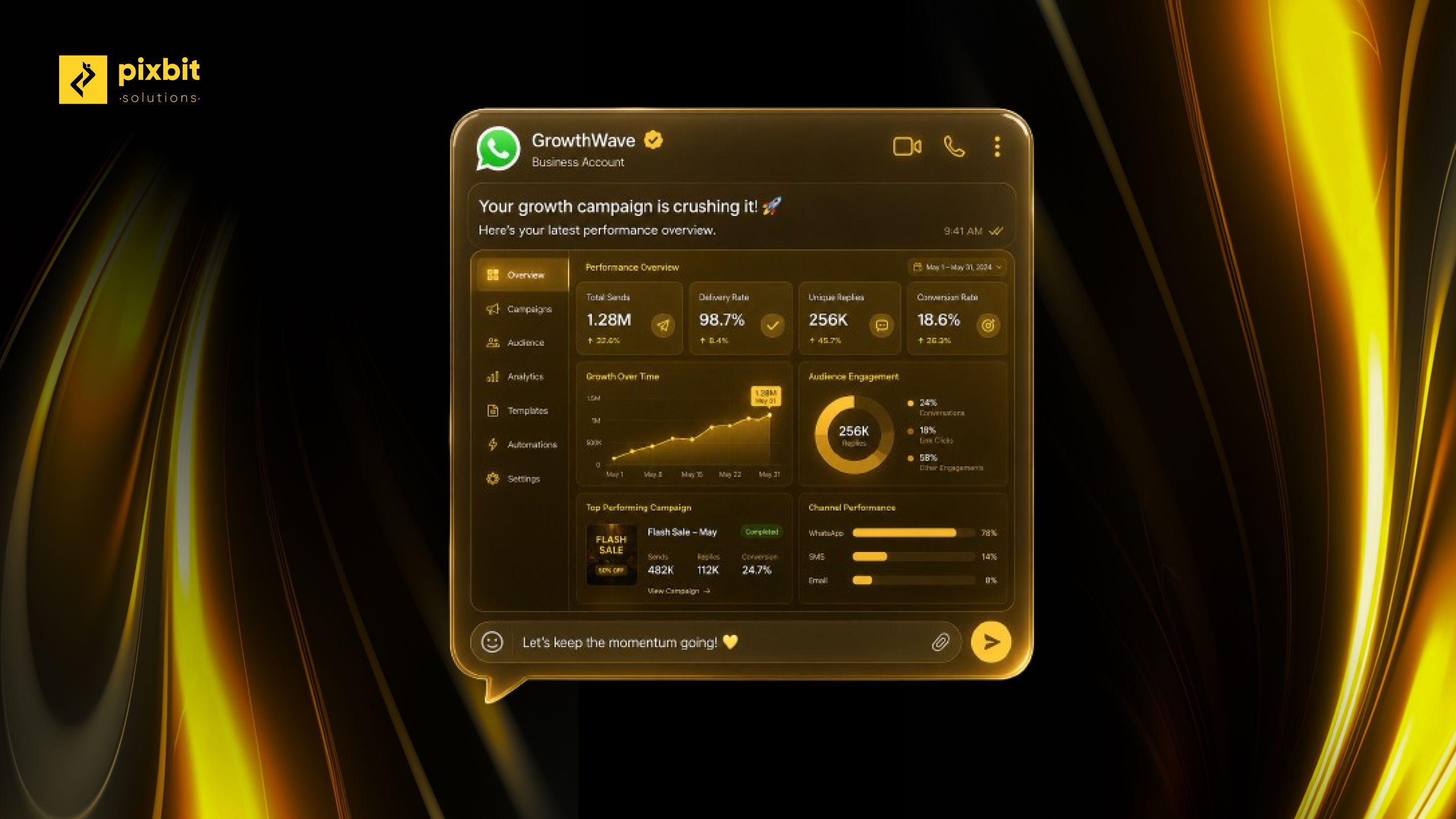
How to Use WhatsApp Marketing for Your UAE App: The Playbook Founders Aren't Sharing
Most UAE app founders spend months optimising app store listings, push notifications, paid ads, and email campaigns while ignoring the channel their customers use every day.
That channel is WhatsApp.
In the UAE, WhatsApp is not simply a messaging app. It is where customers ask questions, compare products, complete purchases, request support, receive updates, and increasingly discover new businesses. For many consumer apps, WhatsApp has become more important than email and often generates higher engagement than push notifications.
The mistake many founders make is treating WhatsApp as a support channel.
The highest-growth UAE apps use WhatsApp across the entire customer lifecycle. They acquire users through WhatsApp, onboard them through WhatsApp, re-engage inactive users through WhatsApp, and provide customer support through WhatsApp.
This is the difference between having WhatsApp installed and having a WhatsApp growth engine.
For teams building consumer applications, marketplaces, healthcare platforms, fintech products, education apps, and loyalty programs, WhatsApp marketing is increasingly becoming a core product feature rather than a marketing add-on.
At Pixbit Solutions, we frequently see WhatsApp integrated into broader mobile app growth strategies because it consistently outperforms traditional communication channels in the UAE market.
Why WhatsApp Works Differently in the UAE
Many global app growth playbooks are built around email.
The UAE behaves differently.
Consumers often respond to WhatsApp messages faster than emails. Many users keep push notifications disabled while still actively checking WhatsApp throughout the day. Business communication, customer support, service requests, appointment confirmations, and purchase decisions increasingly happen inside WhatsApp conversations.
This creates a significant opportunity for app founders.
When a customer ignores an email, they may never see it. When they ignore a push notification, it disappears from view. When they receive a WhatsApp message, it enters the same environment where they communicate with family, friends, colleagues, and businesses.
That visibility changes engagement behaviour dramatically.
The result is that WhatsApp frequently becomes the highest-performing communication channel after direct in-app engagement.
The Four Growth Functions WhatsApp Should Serve
Most apps only use WhatsApp for support.
The strongest-performing apps use it across four separate growth functions.
The first is acquisition.
The second is onboarding.
The third is retention.
The fourth is reactivation.
When WhatsApp is connected to all four stages, it becomes a measurable growth channel rather than a messaging tool.
Acquisition: Turning WhatsApp into an App Install Channel
Most app marketing campaigns end when someone clicks an ad.
The better approach is to move prospects into a WhatsApp conversation before asking them to install the app.
This works particularly well for higher-consideration products such as healthcare apps, insurance platforms, financial products, educational apps, real estate applications, and loyalty programs.
Instead of directing traffic directly to the App Store or Google Play, the user enters a WhatsApp conversation where automated workflows answer questions, explain benefits, and guide the user toward installation.
The conversion rate often improves because users receive information before committing to download the application.
For UAE consumers, this conversational approach feels natural because WhatsApp already serves as a trusted communication channel.
Onboarding: Where WhatsApp Outperforms Push Notifications
Most applications lose users within the first few days after installation.
The problem is rarely acquisition.
The problem is onboarding.
Users install the app, open it once, encounter friction, and never return.
WhatsApp creates an opportunity to continue onboarding outside the application itself.
A user who installs a healthcare app can receive appointment setup guidance through WhatsApp.
A loyalty app can explain reward activation.
A fintech application can guide users through verification steps.
A marketplace app can walk sellers through listing creation.
Because the messages arrive in a familiar environment, users are more likely to complete onboarding tasks that they would otherwise ignore inside the application.
Retention: Building Habit Through Conversations
Push notifications are often one-directional.
WhatsApp allows interaction.
That difference matters.
A food delivery platform can send personalised reorder reminders.
A fitness application can deliver weekly progress summaries.
A healthcare app can send medication reminders.
A loyalty application can notify users about expiring rewards.
Instead of broadcasting generic updates, the platform creates conversations tied to actual user behaviour.
The result is stronger retention and more repeat engagement.
Reactivation: Recovering Dormant Users
Every app accumulates inactive users.
The traditional response is email.
Unfortunately, inactive users often ignore email completely.
WhatsApp provides a more direct reactivation channel.
Users who have not opened the application for thirty days can receive personalised messages tied to previous activity.
A marketplace user might receive recommendations based on past searches.
A fitness user might receive a progress challenge.
A loyalty user might receive information about expiring benefits.
Because the communication feels personal rather than promotional, reactivation performance is often significantly higher than traditional email campaigns.
WhatsApp Business API vs Regular WhatsApp Business
Many founders begin with the free WhatsApp Business application.
This works for small-scale operations.
It becomes limiting once automation enters the picture.
The WhatsApp Business API is what powers enterprise-grade workflows.
It enables automated onboarding sequences, CRM integrations, chatbot experiences, event-driven messaging, customer segmentation, and large-scale communication workflows.
The API also allows communication to be triggered directly from application events.
When a user completes registration, the app triggers a WhatsApp onboarding flow.
When a user abandons onboarding, the app triggers a recovery workflow.
When a customer becomes inactive, the app triggers a reactivation campaign.
This is where WhatsApp shifts from communication tool to growth infrastructure.
The Best UAE App Use Cases for WhatsApp
Healthcare applications benefit from appointment reminders, prescription notifications, follow-up communications, and patient engagement workflows.
Insurance platforms use WhatsApp for quote requests, policy updates, renewal reminders, and claims communication.
Marketplace applications use WhatsApp for buyer-seller interactions, order updates, and onboarding assistance.
Educational platforms use WhatsApp for course reminders, student engagement, and progress tracking.
Loyalty and rewards applications use WhatsApp for reward notifications, redemption reminders, and campaign activation.
In each case, the communication is tied directly to user behaviour rather than generic marketing broadcasts.
WhatsApp vs Push Notifications
Many founders assume push notifications should always be the primary engagement channel.
That assumption is increasingly outdated.
Push notifications work best for immediate application actions.
WhatsApp performs better when context, explanation, or conversation is required.
A simple order update may work through push.
A detailed onboarding explanation works better through WhatsApp.
A reminder to complete identity verification works better through WhatsApp.
A customer support issue almost always works better through WhatsApp.
The strongest consumer apps use both channels rather than forcing one channel to do everything.
The Compliance Side Founders Ignore
WhatsApp marketing in the UAE is not a free-for-all.
Consent matters.
User permission matters.
Message frequency matters.
Broadcasting promotional messages to users who have not opted in creates risk and damages brand trust.
The most effective WhatsApp programs are permission-based.
Users explicitly agree to receive communications during registration, onboarding, or account creation.
Messaging is then tied to specific customer actions and preferences.
This produces better engagement and reduces complaints.
Compliance should be designed into the platform architecture from the beginning rather than added after launch.
The Architecture Behind a WhatsApp-Driven App
WhatsApp marketing performs best when integrated directly into the application stack.
The app generates behavioural events.
Those events trigger communication workflows.
The workflows send WhatsApp messages through the Business API.
Responses flow back into the CRM, analytics platform, and customer profile.
This creates a feedback loop that continuously improves communication performance.
For most UAE applications, the architecture typically includes the mobile app, backend services, CRM integration, analytics layer, and WhatsApp Business API integration working together as a single system.
This is why WhatsApp should be scoped during product development rather than treated as a marketing add-on later.
What Does WhatsApp Integration Cost?
WhatsApp integration costs vary significantly based on the level of automation required.
A simple customer support integration requires far less development effort than a fully automated acquisition, onboarding, retention, and reactivation engine.
Most custom implementations begin with core Business API integration and expand into behavioural automation over time.
Exact cost depends on scope — Pixbit scopes all builds in a single discovery session.
If you're evaluating WhatsApp-driven growth workflows for your application, you can book a discovery call to discuss requirements before development begins.
5 Mistakes UAE App Founders Make
Mistake #1: Using WhatsApp Only for Support
Support is important, but it represents only one stage of the customer lifecycle.
The highest-performing apps use WhatsApp for acquisition, onboarding, retention, and reactivation as well.
Mistake #2: Replacing Push Notifications Completely
WhatsApp and push notifications serve different purposes.
Apps that combine both channels usually outperform apps that depend entirely on one.
Mistake #3: Broadcasting Generic Messages
Users respond to relevance.
Behaviour-triggered messages consistently outperform generic promotional broadcasts.
Mistake #4: Ignoring Consent Management
Permission is critical.
Users who actively opt in generate stronger engagement and fewer complaints.
Mistake #5: Treating WhatsApp as a Marketing Tool
The most successful implementations connect WhatsApp directly to product workflows.
When messaging becomes part of the application experience, performance improves across the entire customer journey.
Why Pixbit Solutions
Pixbit's mobile app development company in Dubai team builds WhatsApp Business API messaging into the app itself, so consent, templates and push notifications are managed in one place.
WhatsApp marketing works best when product, automation, analytics, and communication workflows are designed together.
At Pixbit Solutions, we build mobile applications, customer platforms, and business systems using Laravel, React, Next.js, and Flutter. With experience delivering products across multiple industries and markets, we help companies design communication workflows that fit naturally into the customer journey rather than being added as an afterthought.
Getting Started
If you're building a consumer app for the UAE market, WhatsApp should be part of the architecture discussion from day one.
Whether you're launching a marketplace, healthcare platform, loyalty app, fintech product, or customer engagement platform, book a discovery call with Pixbit Solutions. We help founders scope WhatsApp-driven acquisition, onboarding, retention, and reactivation workflows before development begins.

Nabeel Al Nassir
Digital Marketer
Share on
Have an idea that needs to go mobile? Launch it with us!
Have an idea that needs to go mobile? Launch it with us!
Let's Talk
You May Also Like
Explore insightful articles and tips from our experts on the latest trends in web development and marketing.
Have an idea ?
Let's make it happen
Tell us your business aspirations, and let's craft a custom solution that drives business growth, ensuring satisfaction and exceeding your goals with precision.
Let's Talk