
Fixed Asset Management Software for UAE Businesses
Nabeel Al Nassir
August 21, 2026
5 Min read
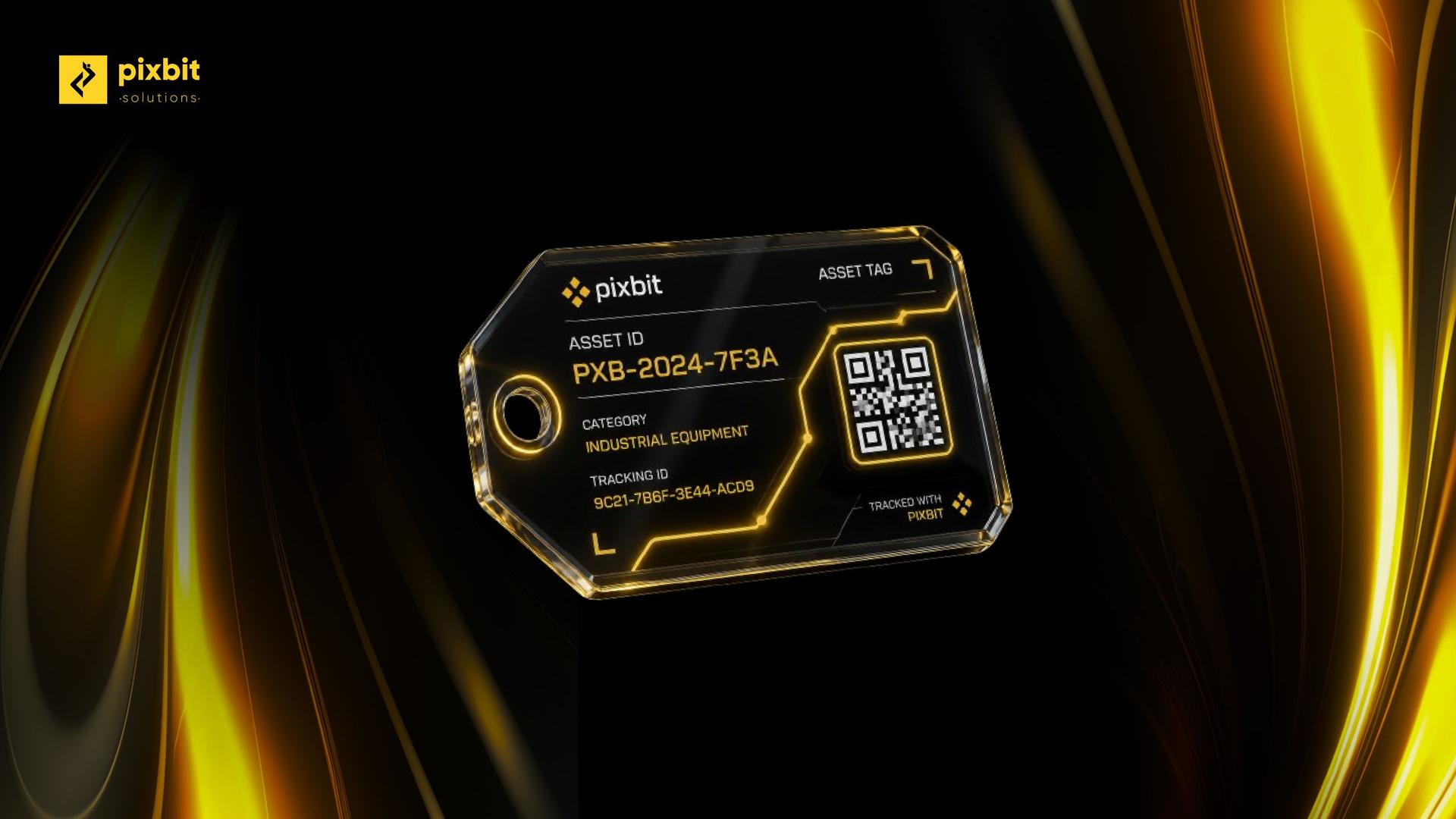
Fixed asset management software tracks the acquisition cost, location, depreciation, maintenance history, transfers, and disposal of physical business assets — equipment, vehicles, IT hardware, and fixtures — throughout their lifecycle. For UAE businesses, that means data structured to support Corporate Tax depreciation schedules, FTA audit trails, and multi-emirate operations, integrated with the ERP or accounting system the business already runs rather than replacing it.
What Is Fixed Asset Management Software?
It is the system of record for everything a business owns that isn't inventory for sale: the equipment on a factory floor, the vehicles in a fleet, the laptops issued to staff, the fixtures inside a leased office. Each asset carries a purchase cost, a depreciation schedule, a current location, a maintenance history, and eventually a disposal or transfer record. Done properly, this is the single source of truth finance, operations, and auditors all pull from instead of maintaining three different versions of the same list.
Why Spreadsheets Stop Working for Fixed Assets
A spreadsheet handles fixed assets fine for the first fifty entries. Past that, it breaks down in predictable ways: nobody updates it when an asset moves between locations, depreciation formulas get copied down incorrectly after a new row is inserted, and there's no audit trail showing who changed what and when. For a UAE business that also needs to support a Corporate Tax filing, that last gap is the expensive one — an auditor asking for supporting documentation on an asset disposed of two years ago shouldn't turn into an afternoon of reconstructing what happened from memory and email threads.
What a Fixed Asset Register Should Actually Track
At minimum, every asset record needs a unique identifier, category, acquisition cost and date, current location, assigned custodian, depreciation method and accumulated depreciation, maintenance history, and — when it happens — disposal date, method, and value. The register should be the single place these facts live, linked outward to supporting documents (invoices, warranty certificates, service records) rather than storing that information in separate, disconnected files.
UAE Corporate Tax and Asset Depreciation
Since Corporate Tax took effect, UAE businesses need depreciation calculated and documented in a way that holds up under FTA review, not just in a way that satisfies internal management reporting. That usually means keeping tax-basis depreciation separate from any accounting-basis depreciation policy the business also runs, since the two don't always follow the same schedule or method. An asset register that only stores one depreciation figure per asset creates a reconciliation problem the moment those two numbers diverge.
Depreciation Needs an Asset-Level Data Model
Depreciation isn't a single company-wide number — it's calculated per asset, based on that asset's category, useful life, and depreciation method. A data model that treats depreciation as an asset-level attribute, calculated automatically from the asset's own record, avoids the manual recalculation errors that spreadsheets are prone to whenever an asset is part-disposed, revalued, or transferred between cost centers.
FTA Audit Trails and Supporting Records
Corporate Tax records generally need to be retained for at least seven years after the relevant tax period, which means the software needs to preserve historical asset events — not just current state — for that entire window. That includes acquisition documentation, every depreciation adjustment, transfer history, and disposal records, all retrievable without needing to reconstruct them from backups or old spreadsheet versions.
Barcode and RFID Asset Tracking
Physical verification is where most manual asset registers quietly go wrong — an asset's paper trail can look perfect while the item itself has been moved, lost, or written off informally without anyone updating the record. Barcode or RFID tagging closes that gap by letting staff scan an asset — through a mobile app built for the job — during an audit or transfer and have the system record it in real time, rather than relying on someone remembering to update a spreadsheet afterward.
Multi-Emirate Asset Management in the UAE
A business operating across more than one emirate needs asset records that can carry different registration, authority, or compliance requirements depending on where the asset physically sits, without forcing every location into the same fixed set of fields. This matters most for vehicles and equipment subject to emirate-specific registration, where a single flat schema built around one emirate's rules tends to break the moment a second location is added.
Asset Maintenance Should Connect to the Asset Register
Maintenance scheduling that lives in a separate tool from the asset register creates the same problem as a disconnected spreadsheet: two systems that drift apart over time. Connecting maintenance history directly to the asset record means a service event updates the same place depreciation, location, and custodian data live, so a full asset history is one lookup rather than a reconciliation exercise across systems.
Fixed Asset Software Should Connect to Your ERP
Most UAE businesses already run an ERP or accounting system that owns financial transactions, and fixed asset software shouldn't try to replace that — it should integrate with it. The asset register can own the operational detail (location, condition, maintenance, custodian) while syncing acquisition cost, depreciation, and disposal entries to the ERP through an API or scheduled integration, keeping both systems accurate without duplicate data entry.
Industries That Need Fixed Asset Management
Fixed asset management is not a single-industry problem. Manufacturing companies use it to track production machinery, tools, plant equipment, and maintenance history. IT departments manage laptops, desktops, servers, networking equipment, and employee assignments through it. Hospitality businesses track kitchen equipment, furniture, HVAC systems, laundry equipment, and property fixtures. Healthcare organizations maintain records for medical devices, diagnostic equipment, beds, laboratory equipment, and service contracts. Facilities management companies track equipment across multiple customer sites and connect assets to maintenance schedules. Logistics companies manage vehicles, warehouse equipment, and handling machinery.
Commercial real estate is a related but structurally different use case. A property owner or portfolio manager doesn't just need depreciation and maintenance data — they need assets tied to a specific building, floor, and often a specific tenant, with a clear split between what the landlord owns and what a tenant owns. That structure is different enough from a standard company asset register that it's covered in its own guide rather than as a subsection here: see Pixbit's asset tracking software for commercial real estate for the portfolio-specific version of this problem.
Fixed Asset Management vs. CRE Portfolio Asset Tracking
It's worth being explicit about the boundary, since the two get searched for in overlapping ways. This page is for a single organization tracking equipment, vehicles, IT hardware, or fixtures that it owns outright, where depreciation and a straightforward custodian-and-location model cover the requirement. If assets need a building-floor-tenant hierarchy, a landlord-versus-tenant ownership split, or portfolio-level reporting across multiple properties, that's a different data model — Pixbit's commercial real estate asset tracking guide covers that case specifically. Most businesses reading this page fall into the first category; real estate portfolio owners and property managers should start with the CRE-specific guide instead.
Packaged ERP Asset Modules vs. a Custom Build
Most major ERP platforms include a fixed asset module, and for a business with straightforward, single-emirate operations and standard asset categories, that module is often sufficient. The case for a custom build shows up when the asset structure doesn't fit the packaged module cleanly — multi-emirate compliance fields, non-standard asset categories, or maintenance workflows the ERP wasn't designed around — since bending a packaged module to fit an unusual structure is often more expensive over time than building the specific fields needed from the start.
How a Custom Fixed Asset Platform Should Be Architected
A custom build should keep the asset register as the system of record for operational data (location, condition, custodian, maintenance) while treating the ERP as the system of record for financial transactions, connected through a defined integration rather than a one-time data migration. This keeps both systems authoritative for what they're best at and avoids the common failure mode of a custom asset tool that slowly becomes a second, conflicting source of financial truth.
When Should a UAE Business Build Custom Fixed Asset Software?
Custom development makes sense once a business has outgrown what a packaged ERP module or spreadsheet can reasonably support — usually signaled by asset categories the ERP doesn't model well, maintenance workflows that require approvals or transfers the packaged tool doesn't support, or multi-emirate compliance requirements that need per-location configuration a standard module treats as fixed.
Fixed Asset Management Software for UAE Businesses: Summary
| Requirement | What It Means | Software Implication |
|---|---|---|
| Asset register | Every physical asset needs a unique identity and lifecycle record. | Use a centralized asset master linked to transactions and documents. |
| Depreciation | Asset values need to be tracked according to accounting policies and relevant tax treatment. | Separate asset data, depreciation policies, accounting values, and tax-related adjustments. |
| Corporate Tax records | FTA expects supporting records, including asset purchases and disposals. | Preserve historical asset events and supporting documentation. |
| Seven-year record retention | Corporate Tax records and documents generally need to be retained for at least seven years after the relevant tax period. | Build appropriate archival, retrieval, and audit-history capabilities. |
| Barcode and RFID | Physical assets need reliable identification during audits and transfers. | Support QR, barcode, RFID, serial numbers, and mobile scanning. |
| Multi-emirate operations | Asset-specific registration and authority requirements can vary by asset and location. | Make location, authority, registration, and compliance fields configurable by asset type. |
| Maintenance history | Service events affect operating cost and replacement decisions. | Connect maintenance records and work orders to the asset lifecycle. |
| ERP integration | Accounting and ERP systems may already own financial transactions. | Define system-of-record boundaries and synchronize through APIs or integration services. |
| Multiple asset categories | Vehicles, IT equipment, machinery, and fixtures have different attributes. | Use a flexible asset data model with category-specific fields. |
| CRE portfolios (different model) | Real estate assets need building, floor, and tenant-level structure, not just a company-wide register. | Use the CRE-specific asset tracking guide instead of this page's data model. |
Frequently Asked Questions
Which software is best for managing fixed assets? The best fixed asset software depends on the company's asset types, accounting system, number of locations, maintenance requirements, reporting needs, and integrations.
What is the best software for asset management? There is no single best asset management system for every UAE business. The right choice depends on whether the organization needs basic asset registers, depreciation and accounting, barcode or RFID tracking, maintenance management, fleet workflows, multi-location operations, or integration with an existing ERP.
Which ERP is mostly used in UAE? The UAE market includes multiple ERP platforms serving businesses of different sizes and industries, so there is no single ERP that can accurately be described as the one mostly used across the entire UAE market.
What does fixed asset management software track? Fixed asset management software can track an asset's acquisition cost, purchase date, category, serial number, location, custodian, depreciation, maintenance history, transfers, warranty information, verification history, and disposal.
Can fixed asset software integrate with an existing ERP? Yes. A fixed asset platform can integrate with an existing ERP or accounting system rather than replacing it.
Is this the right software for a commercial real estate portfolio? Not on its own. Real estate portfolios need assets tied to buildings, floors, and tenants with a landlord-versus-tenant ownership split, which is a different data model covered in Pixbit's commercial real estate asset tracking guide.
Summary
A fixed asset register that only exists as a spreadsheet stops holding up the moment Corporate Tax documentation, multi-emirate operations, or basic audit trails enter the picture. Pixbit Solutions builds fixed asset management software around how a specific UAE business actually operates — its asset categories, its ERP, its compliance requirements — connected to existing systems rather than replacing them. Pricing depends on asset volume, integration complexity, and whether barcode or RFID tracking is in scope; Pixbit scopes this in a single discovery session.

Nabeel Al Nassir
Digital Marketer
Share on
Have an idea that needs to go mobile? Launch it with us!
Have an idea that needs to go mobile? Launch it with us!
Let's Talk
You May Also Like
Explore insightful articles and tips from our experts on the latest trends in web development and marketing.



Have an idea ?
Let's make it happen
Tell us your business aspirations, and let's craft a custom solution that drives business growth, ensuring satisfaction and exceeding your goals with precision.
Let's Talk