
WhatsApp AI Chatbot for UAE Businesses: What Is Allowed, What It Costs and How to Build One
Nabeel Al Nassir
November 12, 2026
10 Min read
A WhatsApp AI chatbot is software that answers customer messages on WhatsApp using an AI model grounded in a business's own content, then hands complex cases to staff. For UAE businesses in 2026, two rule changes shape every build: Meta has barred general-purpose AI assistants from the WhatsApp Business Platform since 15 January 2026, and business replies inside the 24-hour customer window have been billed per message since 1 October 2026.
Both changes push in the same direction. A WhatsApp chatbot now has to be clearly about your business, and it has to resolve questions in fewer messages. A bot that loops, asks the same question twice or sends five short replies where one would do now costs money on every exchange. The rest of this guide explains what the rules allow, what the new pricing means in practice, and how a custom chatbot is built for a UAE company that wants it to read its own systems rather than a generic FAQ.
What Is a WhatsApp AI Chatbot?
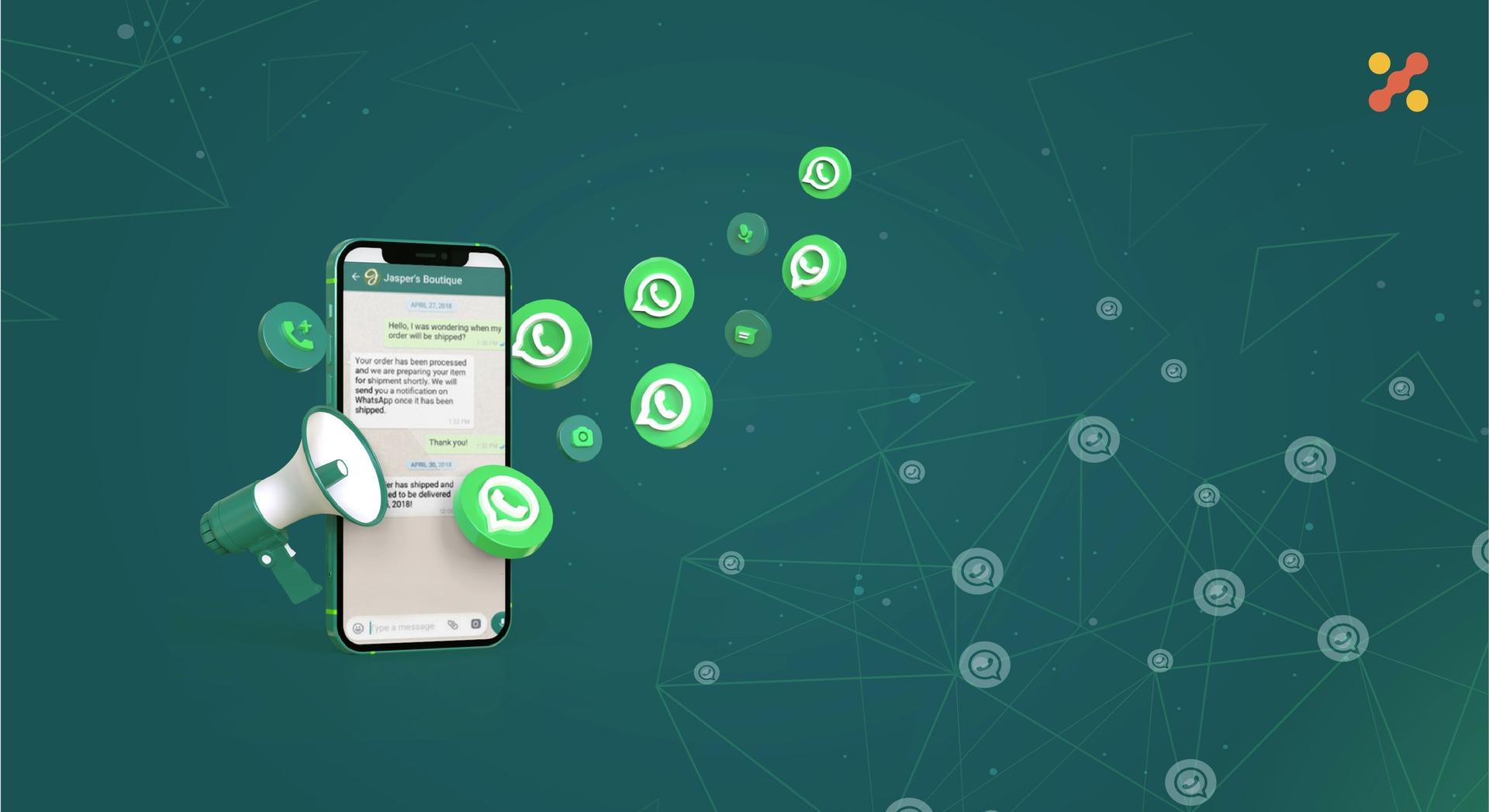
A WhatsApp chatbot is any automated responder connected to a business WhatsApp number. The older kind is rule-based: it shows menus, waits for a button press and follows a fixed decision tree. That works when the questions are predictable, such as opening hours or a delivery status lookup.
A WhatsApp AI chatbot uses a language model to understand free-text messages in Arabic or English, finds the answer in approved business content such as service lists, policies, price ranges or property listings, and replies in natural language. A step beyond that is an AI agent, which can also take actions: booking a viewing, updating a lead in the CRM, rescheduling an appointment or creating a support ticket. Our guide to AI agents for Dubai companies covers that layer in more depth.
In practice most UAE builds combine all three. Fixed menus handle the high-volume routine paths, the AI layer handles open questions, and agent actions sit behind approval rules so nothing touches money or a customer record without the right checks.
Meta's January 2026 Rule: Business Chatbots Yes, General-Purpose Assistants No
In October 2025 Meta added a section on AI providers to the WhatsApp Business Solution terms. New accounts came under it from 15 October 2025, and every existing account from 15 January 2026. The rule stops AI companies from using the WhatsApp Business Platform to distribute general-purpose assistants whose main function is open-ended conversation. That is why ChatGPT and Copilot left WhatsApp in January.
The rule does not ban AI chatbots for business. A bank answering card questions, a clinic booking appointments, a developer qualifying buyer enquiries or a retailer tracking orders is using WhatsApp for customer service and business messaging, which is the purpose Meta describes for the platform. The practical test is scope. A bot that answers questions about your products, services, bookings and accounts is in bounds. A bot that will happily write essays, plan holidays or answer anything a user types starts to look like a general assistant.
For a custom build this becomes a design requirement. The system prompt and retrieval layer should keep the model on your business, decline off-topic requests politely, and route anything unclear to a person. That keeps the account compliant and, as the next section shows, keeps the message bill down.
What Changed on 1 October 2026: Service Replies Now Cost Money
From July 2025 Meta moved the WhatsApp Business Platform to per-message pricing for template messages, and replies inside the 24-hour customer service window stayed free. That changed on 1 October 2026. Free-form service replies a business sends inside the window are now charged per delivered message, and utility templates sent inside the window are charged as well.
Each business phone number receives 1,000 free service messages a month. After that, every service reply is billed at the market's service rate, which Meta's October rate card set equal to the utility rate. Messages a customer sends to you remain free. Conversations that start from a click-to-WhatsApp ad still open a free entry-point window. Replies generated by Meta's own built-in business AI are billed separately by token usage, a model Meta introduced in August 2026.
For an AI chatbot this changes the economics in three ways. First, verbosity has a cost, so replies should be complete in one message rather than split into several. Second, clarifying questions should be asked once and well, which means the bot needs good context from the CRM or booking system before it replies. Third, the handover to a human should happen early on complex cases, because a long AI exchange that ends with a human anyway pays twice. A well-scoped bot often costs less to run under the new pricing than a badly designed menu bot, because it resolves the question instead of bouncing the customer around.
WhatsApp Business App vs WhatsApp Business Platform
The free WhatsApp Business app on a phone suits a small shop answering messages by hand. It does not let you connect your own AI model, your CRM or your booking system. A custom WhatsApp AI chatbot runs on the WhatsApp Business Platform through the Cloud API, which gives a verified business account, approved message templates, webhooks for incoming messages and the ability to connect any backend.
Access to the platform comes either directly through Meta or through a Business Solution Provider. Many UAE companies already use an inbox platform from a provider for their sales team. A custom AI layer can sit alongside that inbox, or replace it, depending on whether the team needs a shared human inbox as well as automation.
Arabic, English and Everything in Between
UAE customers write in English, Modern Standard Arabic, Gulf dialect and Arabizi, often in the same conversation. A chatbot that handles English well but stumbles on a voice-note transcript in Gulf Arabic will push the most valuable customers straight to a human.
Model choice matters here. Current general models handle Gulf Arabic and English well, and UAE-built models such as Jais and Falcon are options when Arabic quality or local hosting is the priority. The only reliable way to choose is to test candidate models on your real past conversations, scored against answers your team agrees are correct. Right-to-left formatting, Arabic numerals, names and addresses all need checking in that evaluation, not after launch.
Data Protection and Where the Data Lives
A WhatsApp chatbot processes personal data from the first message: names, phone numbers, and often Emirates ID numbers, health details or financial information. The UAE Personal Data Protection Law, Federal Decree-Law No. 45 of 2021, applies to most businesses onshore. Companies in the DIFC and ADGM follow their own data protection regimes, and DIFC Regulation 10 adds specific duties for autonomous and semi-autonomous systems that process personal data.
In practice that means a clear notice that the customer is talking to an automated assistant, a defined purpose for the data the bot collects, access controls on conversation logs, and retention rules. Where sector rules or the client's policy require data to stay in the country, the application layer and conversation store can run on UAE cloud regions, and the model can be chosen to run there too. Marketing templates also need opt-in consent and an easy opt-out, separate from service conversations, and our WhatsApp marketing playbook for UAE apps covers how to run those opt-in flows.
How a Custom WhatsApp AI Chatbot Is Built
A sound build starts with use-case discovery rather than the model. The team pulls a sample of real WhatsApp conversations, sorts them by intent, and measures which intents are high-volume, repetitive and safe to automate. Booking changes, order status, document requests and lead qualification usually top the list. Complaints, refunds and anything involving judgment usually stay with people.
Next comes the knowledge and integration layer. The bot needs approved content to answer from, and it needs read access to the systems that hold the real answers: the CRM, the booking engine, the property or product catalogue, the order system. Actions such as rescheduling or updating a lead need write access with limits and logging. This is the part generic chatbot tools struggle with, and it is where most of the build effort goes.
Then the conversation design. Pixbit writes the system rules that keep the bot on topic, defines when it hands over to a human and how that handover appears in the team's inbox, and sets up the approved templates for follow-ups outside the 24-hour window. Every flow is tested in Arabic and English against the evaluation set before launch.
After launch the work continues. The team tracks resolution rate, handover rate, messages per resolved conversation and cost per conversation, then adjusts prompts, content and flows. Under the October 2026 pricing, messages per resolved conversation is the number to watch, because it now maps directly to cost.
Pixbit builds these chatbots through its AI chatbot development service, as part of its wider AI development services in Dubai, and connects them to back-office work through AI automation when the conversation needs to trigger an invoice, a report or a task.
Off-the-Shelf Chatbot Platform or Custom Build?
An off-the-shelf WhatsApp chatbot platform is the right choice when the questions are mostly FAQs, the team needs a shared inbox quickly, and the bot does not need to read or change data in your own systems. Setup is fast and the monthly fee is predictable.
A custom build makes sense when answers depend on live data from your systems, when the bot must take actions with approval rules, when Arabic quality has to be tested and proven, or when data residency rules limit which vendors you can use. It also makes sense when WhatsApp is one of several channels and the same AI should answer on the website and in the mobile app. Our guide to AI chatbot features every business should have is a useful checklist for either route.
What a WhatsApp AI Chatbot Costs in the UAE
The running cost has two parts. The first is Meta's message charges: service replies beyond the 1,000 free messages per number each month, plus any marketing, utility or authentication templates you send. The second is the AI layer and hosting: model usage, the integration backend and the conversation store.
The build cost depends on how many intents the bot handles, how many systems it connects to and how much Arabic testing the use case needs. A focused FAQ and lead-capture bot sits in a modest range, while a bot that reads and writes to a CRM, a booking engine and an ERP sits in a larger band. The exact figure depends on the intents, integrations and monthly message volume, which is why every build starts with a scoping conversation.
Summary: WhatsApp AI Chatbots in the UAE in 2026
Frequently Asked Questions
What is a WhatsApp AI chatbot?
It is an automated assistant on a business WhatsApp number that uses an AI model to understand customer messages in Arabic or English, answers from the business's approved content and systems, and hands complex cases to a human.
Are AI chatbots banned on WhatsApp from 2026?
No. Since 15 January 2026 Meta bars general-purpose AI assistants, such as ChatGPT-style bots, from the WhatsApp Business Platform. Chatbots that serve a business's own customers for support, sales, bookings and updates are still allowed.
Do WhatsApp chatbot replies cost money now?
Yes, beyond a free allowance. Since 1 October 2026 each business phone number gets 1,000 free service messages a month, and replies after that are charged per delivered message. Messages customers send to you stay free.
Can a WhatsApp AI chatbot reply in Arabic?
Yes. Current models handle Gulf Arabic and English, and UAE-built models such as Jais and Falcon are also options. The model should be tested on your real conversations before launch.
Can a WhatsApp chatbot connect to our CRM or booking system?
Yes, when it runs on the WhatsApp Business Platform. The chatbot can read customer and booking data and, with approval rules, update leads, reschedule appointments or create tickets.
Plan Your WhatsApp AI Chatbot With Pixbit
If your team answers the same WhatsApp questions every day, or the October pricing change has made your current bot expensive to run, Pixbit can map which conversations to automate, which systems the bot needs to read, and how to keep it within Meta's rules. Book a discovery session, and Pixbit scopes in a single discovery session.

Nabeel Al Nassir
Digital Marketer
Share on
Have an idea that needs to go mobile? Launch it with us!
Have an idea that needs to go mobile? Launch it with us!
Let's Talk
You May Also Like
Explore insightful articles and tips from our experts on the latest trends in web development and marketing.
Have an idea ?
Let's make it happen
Tell us your business aspirations, and let's craft a custom solution that drives business growth, ensuring satisfaction and exceeding your goals with precision.
Let's Talk